Feeds:
Posts
Comments

Archive for the ‘book’ Category

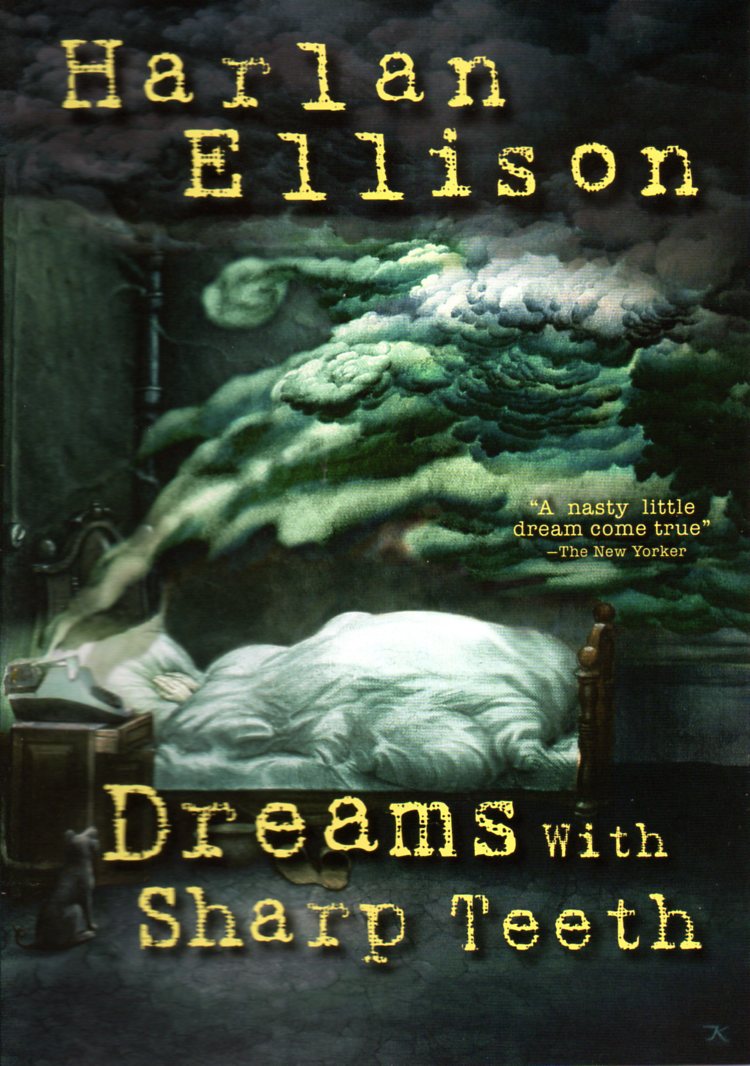
Dreams with Sharp Teeth

dreams with sharp teeth

I got this for Christmas. . . from my husband; it’s cheaper than therapy.

Truthfully, I really needed this DVD, it keeps me sane. OK you can stop laughing now, really, I mean it, seriously. . . stop laughing.

Here’s the thing: I find this documentary about Harlan Ellison massively, well, comforting.

Yes, I said comforting and if you don’t bloody stop laughing I’m going to have to bash you quite painfully hard. . . repeatedly.

So you’re wondering how on Earth I could find an hour and a half documentary about a rage-filled, hair-triggered, somewhat subversive man comforting, even therapeutic, read on.

It makes me remember a simple fact:

I Am Not Alone.

I know exactly how a burning cold boulder of anger and annoyance feels lodged inside your chest.

I know how frustrating it is to keep pounding away at something until I get it right only to find that no one else gets it. That some people will look at me like I’ve got three heads and one of them is drooling. That certain people will be edging in a surreptitious manner toward the exits. (Not that any of this will ever stop me from pursuing making art; I’m ultimately doing it all for me any way.)

I know exactly how maddening it is to be surrounded by stupid people, or worse; people who insist on treating me like I’m stupid.

And. . .

And it doesn’t half hurt that Harlan Ellison is one of the most brilliant and eloquent writers I’ve ever read. Whose work can make me laugh out loud or weep. Whose books I reread over and over. And I read a lot, really a lot; as many as three to five books a week so I have a broad platform for comparison.

Yes, I’m a highly intelligent, well-read, very creative individual with intensely diverse interests who insists on being true to the best of who I am.  The Devil take the consequences. This film is valuable and deeply important and I am grateful to have the opportunity to watch it whenever I need reminding that I Matter. My work Matters.

So go buy this film (or at least rent it). Go Buy everything Harlan wrote (or edited) that you can lay hands on. Why are you still here? Go find his stuff, I swear that you will not regret it. Well, maybe a few of you will but you’ll still be better for having experienced him.


Sidebar: For those of you who have never met me and think from the previous content of this blog that I’m a fairly sweet, light-hearted bundle of goodness and light: Sorry; as it happens that’s not entirely the case.

There is for good or bad a more than middling slice of darkness within me; which is kind of a good thing actually as it makes me far more interesting. And has resulted in my getting interesting nicknames like “Darth Velner”. Still in the end, I, like the planet Earth am classified “mostly harmless”, so no worries.
 

Read Full Post »

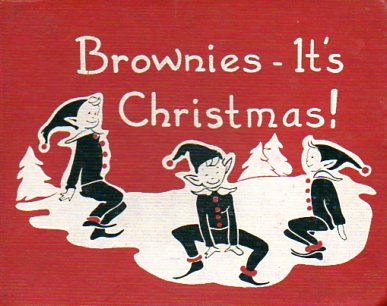
Happy Christmas!

brownies christmas book

and a Very Merry New Year.

From me and all the fae folk of this particularly enchanted vicinity.

Read Full Post »

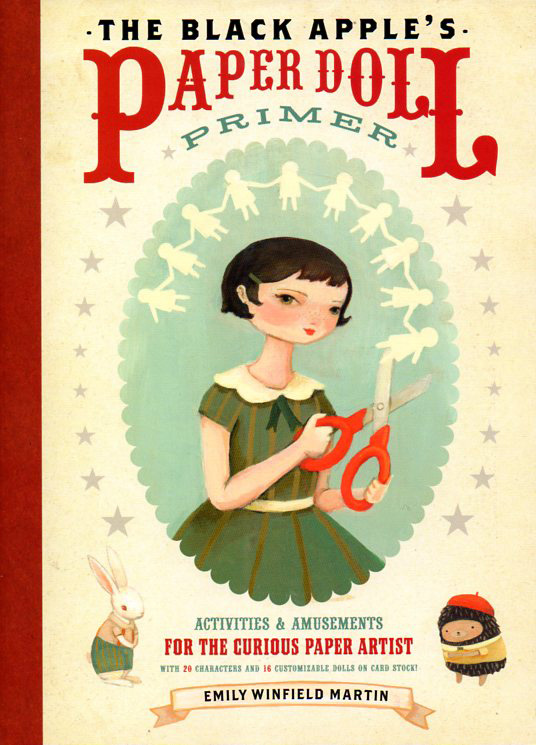
I’ve been having a really good time today playing with a new present I got myself.

black apple paper doll primer

This new book is by artist Emily Martin aka Black Apple. The book is divided into three parts.

Part One is her original paper dolls and their clothes. Each doll has a personality profile including likes and dislikes, for instance, here’s Alice’s list: Likes: Cats, Books with pictures, Her usual height; Dislikes: Boring Lessons, Disorderly tea parties, Egomaniacal Monarchs. Here’s my favorite personality list item . . . Dislikes: Being Poked (Baby) and yes, before you wonder, Baby is just that; a little rosy-cheeked human baby who looks like the kind of tiny baby doll that sort of slumps warm and cozy in the palm of your hand. Part One also includes a section of background paintings, and a toy theater.

Part Two is “Paper You” which is exactly what it sounds like. It has a bunch of customizable paperdolls with equally customizable clothing. You pick the doll that looks the most like the person you want to make a doll of and well, fix it up to include the right color eyes, the correct hair, shoes, etc. Then you make it some clothes. Hours and hours of fun. Here’s the doll I made:

black apple paper doll my version

I had bunches of fun working on this. I did what the book suggested and used my scanner/copier to make color copies to work on. I used colored pencils, clip art and a sticker to decorate the clothes, you know, the sort of stuff that is always lying around the workroom. Most of the clothes are extremely plain, the idea being that they are sort of blank slates for you to build on. For instance the underwear, the green top, the purple/black/white faun dress, and the yellow neck scarf were originally totally white. The yellow dress was just a plain yellow dress, I added the elephant bag (which is NOT in the book, it’s picture I had on file). I colored a hat band on the top hat and added texture/color to the green dress and blue jeans. I added the owls, the faun panel and the bug lady. I did customize the doll itself, adding rosy color, darkening the brows and eyelashes and giving it brown eyes. I also drew the shoes and then made a pair of wicked cool boots out of a practice doll’s feet (her face didn’t work out — oops).

Part Three is projects make with/for the dolls including a storage armoire (to keep the extensive wardrobe of clothing in don’ cha know), play sets, display stands, jointed dolls, flip books, stationary, and a mobile. It also gives directions for playing “Exquisite Creature” which is a more kid-friendly name for “exquisite corpse”; the old funny tri-fold collaborative draw-a-picture game.

This is a particularly nice book. I wish there had been a book like this when I was a little kid. Edith Flack Ackley’s old battered paper doll book borrowed from the library was the best I had back then and this is in color and has better dolls and more projects. Well, better dolls if you’re very into conjoined twins, bears, goth girls and onion-headed creatures . . . which I am. So there.

Read Full Post »

The Popover Family

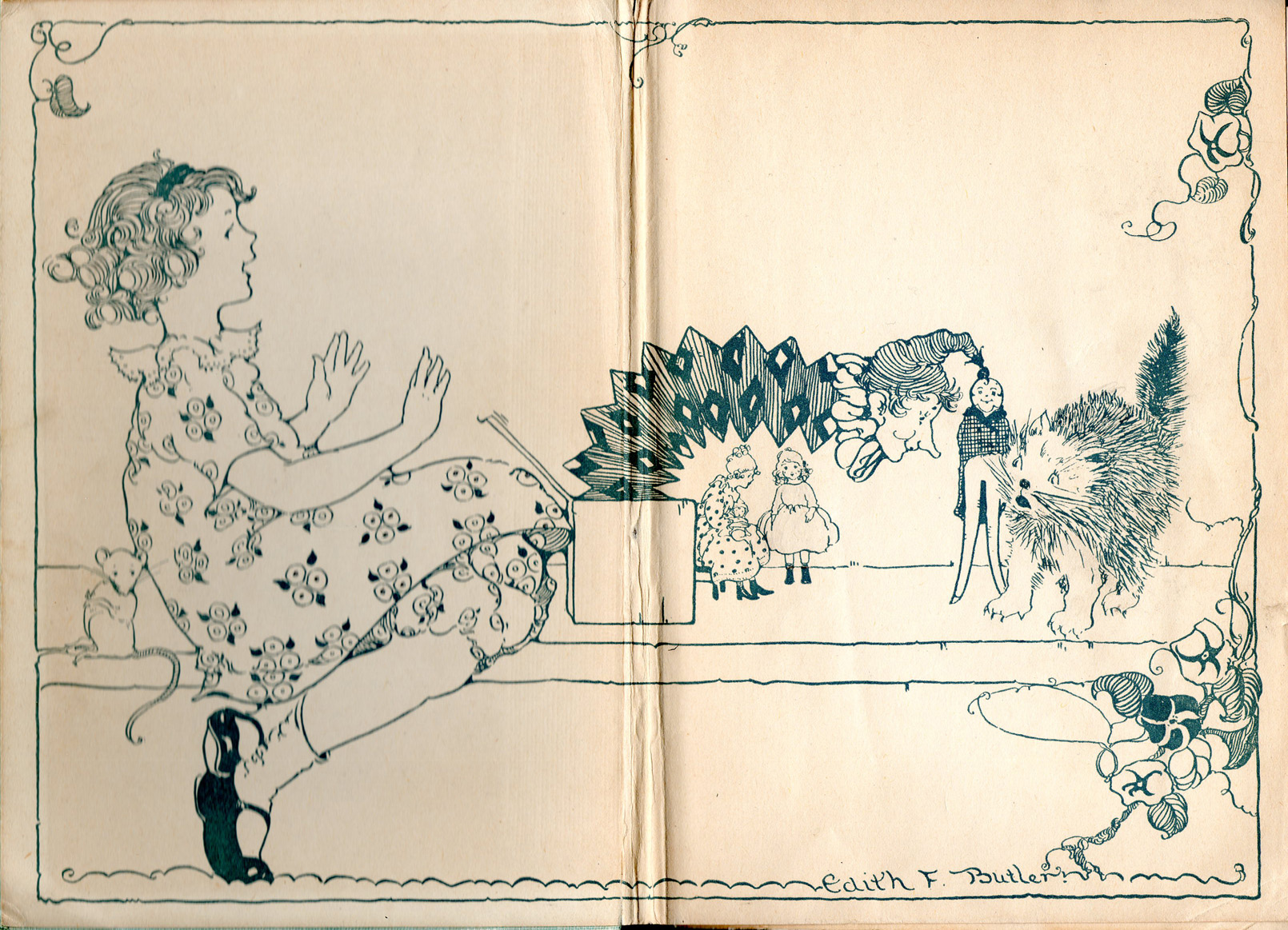
Among the many things I like are books about dolls and their houses (and their people). The Popover Family is such a book, a collection of short stories arrayed as a novel, telling of their many adventures. Comforting adventures with much love and friendship with a dash of excitement. Like many vintage books (this is from 1927) the language is delightfully dated. I’m also inordinately fond of decorated endsheets. Like these:

popover family endsheet

What I find particularly charming about the Popover Family is that fully half the family are improvised dolls. The mother and daughter are regular manufactured dolls; the mother is said to be “a little china doll” and the daughter is stated to be “a little girl doll” which might indicate she’s a bisque doll. But Father Popover and Baby Popover (whose long name is Loo-Loo) are improvised, that is, made of found or as is currently fashionable upcycled objects.

“Mr. Popover was a clothes-pin, tall and slim and brown. His head was small, but his legs were long, and of them he was very, very proud.”

“Baby Popover was a chubby glass bottle, smooth and long and round. He wore a little white cape and a white pointed cap tied over the cork that made his head. He lay in a little wooden cradle, as snug as could be, and he was never so good and quiet as when someone was rocking him to and fro.”

the popover family

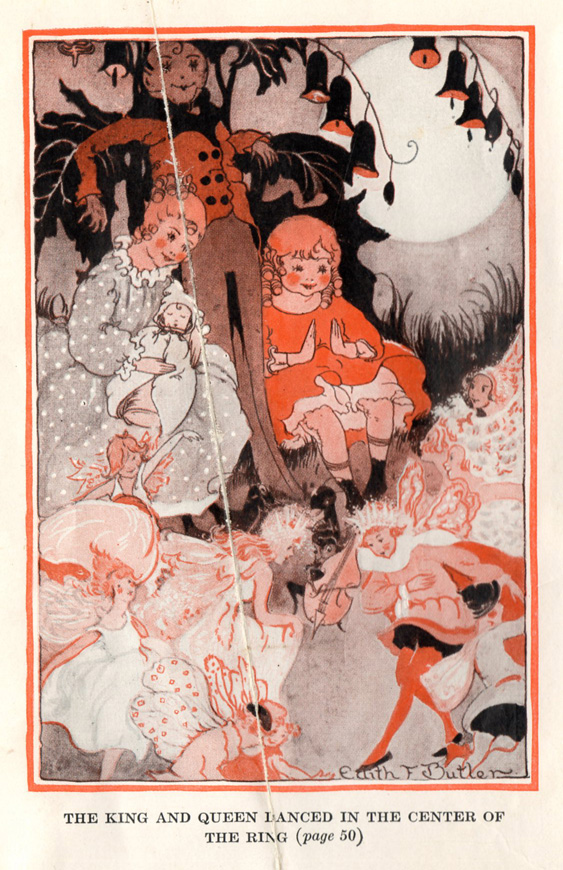
As you can see from the above illustration, there are also fairies in this book. Only in one story but that story is rather atypical for a fairy story, involving a domestic crisis wherein the Fairy Queen’s baby won’t stop screaming unless she holds him so she can’t dance at the ball. Mother and Loo-Loo Popover come to the rescue, the crisis resolved and a jolly time is had by all.

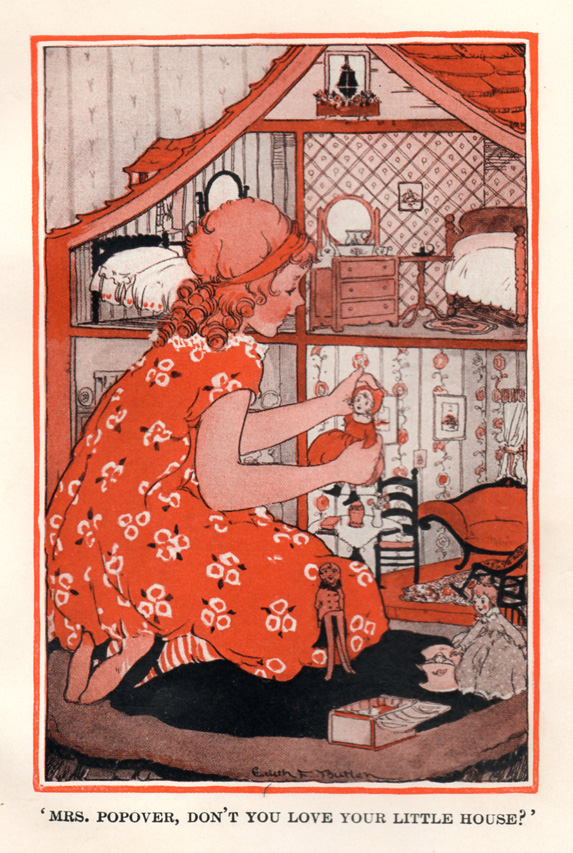
There is a decided emphasis on the power of the imagination in books like these. As an example, look closely at their house.

popover family dollhouse

There are no internal doors, no stairs, and overall a general disregard for having things be in the same scale. So the imagination takes over and then anything, anything at all becomes possible. Tea parties with a feast of crumbs, midnight rides on a mouse named Brownie, and a baby who gets colic after his head came off in the bath and he filled up with water. And that is truly magical.

My copy of The Popover Family is battered and worn, the binding is loose, there are copious pencil marking on the text and it’s missing one of the four illustrations (the last, which I think might be of when Santa visits). I love it just the same.

Read Full Post »

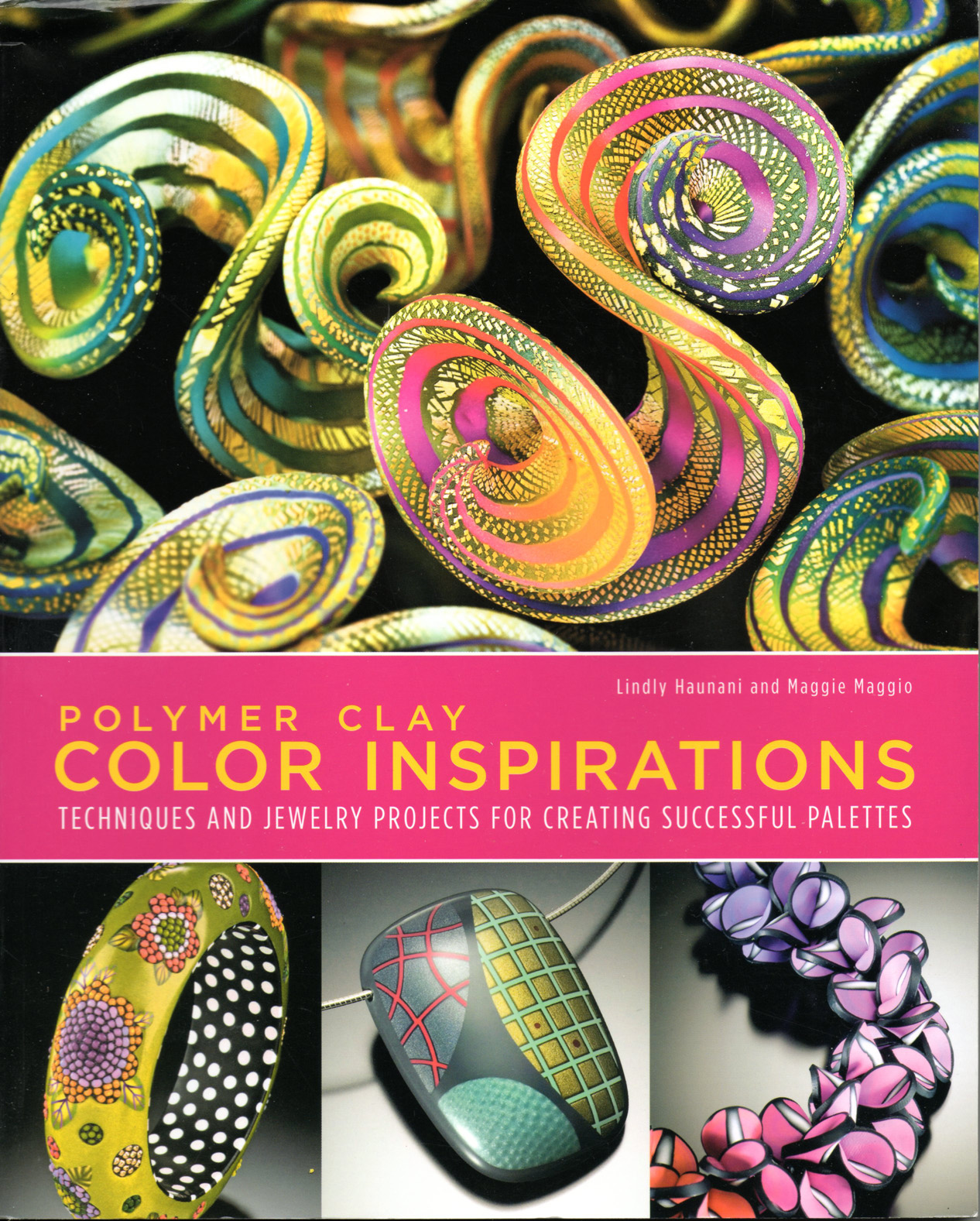
One of the things I liked best about art school was color theory. So when (several years ago) I was sent a link to a video clip showing the process of mixing useful color scales in polymer clay I got interested and starting making a few. As too often happens I got involved with other things and the project got put aside. Then I found that the artist in the video clip had published a book:

polymer clay color inspirations

Wow! If you are at all interested in color and you use polymer clay, you should buy this book. If you’ve never studied the science behind color and it’s use this book will open doors to a new world. If you already know color theory and how/why it works this book will inspire you to push yourself and your work further. There are a number of color mixing exercises which result different types of color palette tools. Here are the results of the tool I made:

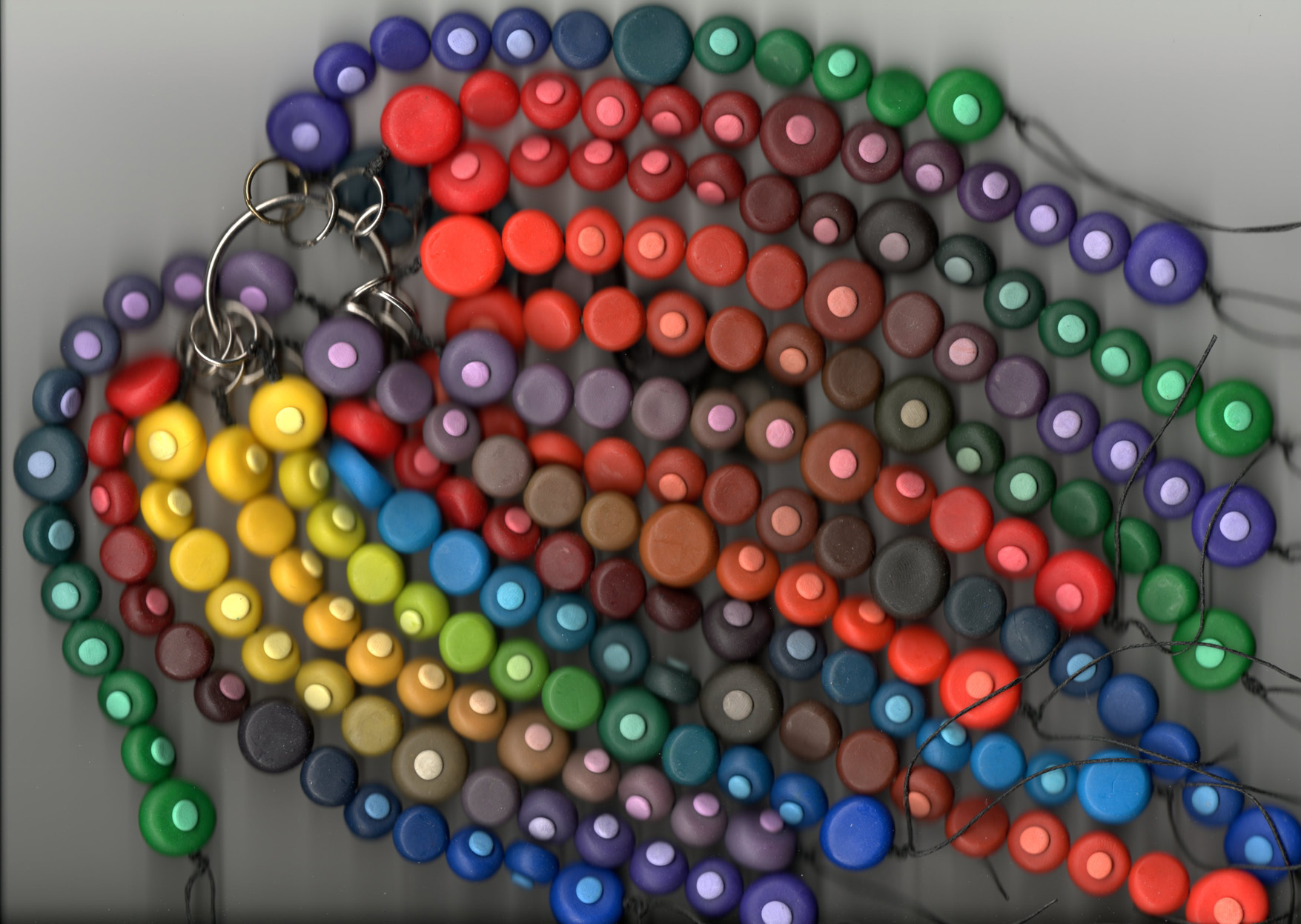
polymer clay rainbow beads

A Rainbow hued group of color scale beads.

polymer clay chromatic beads

And a Chromatic gray (or muddy) hued group of color scale beads. My personal favorites.

I used Kato clay to make these beads which are mixed in a geometric progression of one color to another. Using the geometric progression proportional method covered in the book saves a lot of clay and results in very usable color palettes. I used Kato exclusively because it is formulated specifically for mixing colors and doesn’t experience the hue impurity and color shift problems encountered with other brands.

Here’s what I learned while making these scales.

1) A pasta machine is an absolute necessity. I’d already bought mine years ago to save my hands/wrists from the trauma of conditioning clay but personally wouldn’t even attempt this project without one.

2) Get all the really tedious bits done first. Condition, sheet and cut all your clay into measured bits (I used a 3/4″ square cutter at the thickest sheet setting). Stack all the little squares, wrap up and store in zip-lock baggies. Do this in lightest to darkest color order. Then when you’re ready to mix a few strands everything is ready and measured.

3) Pierce the beads as you finish each mixed strand; I left a few strands until the next day and several beads cracked. Place them on the baking sheet in the mixing order and string them directly from the baking sheet. Order must be preserved! Otherwise you won’t know the correct proportion of colors to mix and that is the whole point of making them in the first place.

4) Choose something very strong to string them. I used a doubled strand of black waxed linen thread from the jewelry department of the local craft store with a double jump ring header so I could bunch them on split book rings to keep them organized.

My beads are made using an onlaid color dot of 50/50 white and the color of the base bead instead of the inlaid color dot technique used in the book. Again I conditioned and sheeted (at a thin setting) all the white I needed then stored it between waxed paper on paper plates to be used as needed. I used a section of plastic drinking straw as a cutter for these pastel onlays.

While the initial purpose of making these color scale beads was to end up with a tool for selecting color mixes I have to say that the end product is a very satisfying and aesthetically pleasant handful of science. Beautiful, colorful science.

Read Full Post »

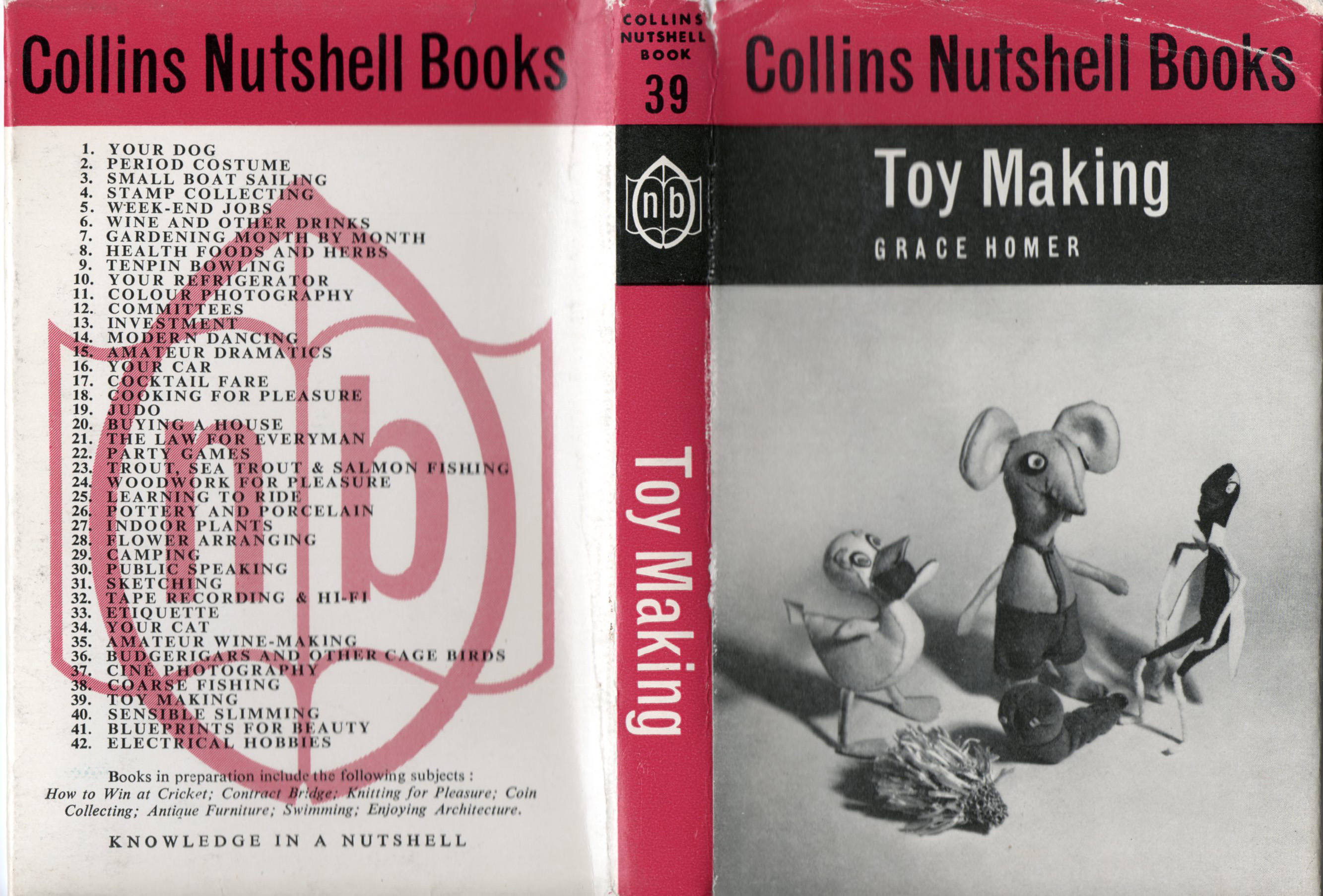
Here for your Halloween enjoyment is a little book from my collection. Literally  little; this puppy measures 4-1/8″ x 6-1/8″. It fits very nicely in the hand.

Nutshell Toy Making dustjacket

I picked this up because I really liked how demented the animals on the cover look.

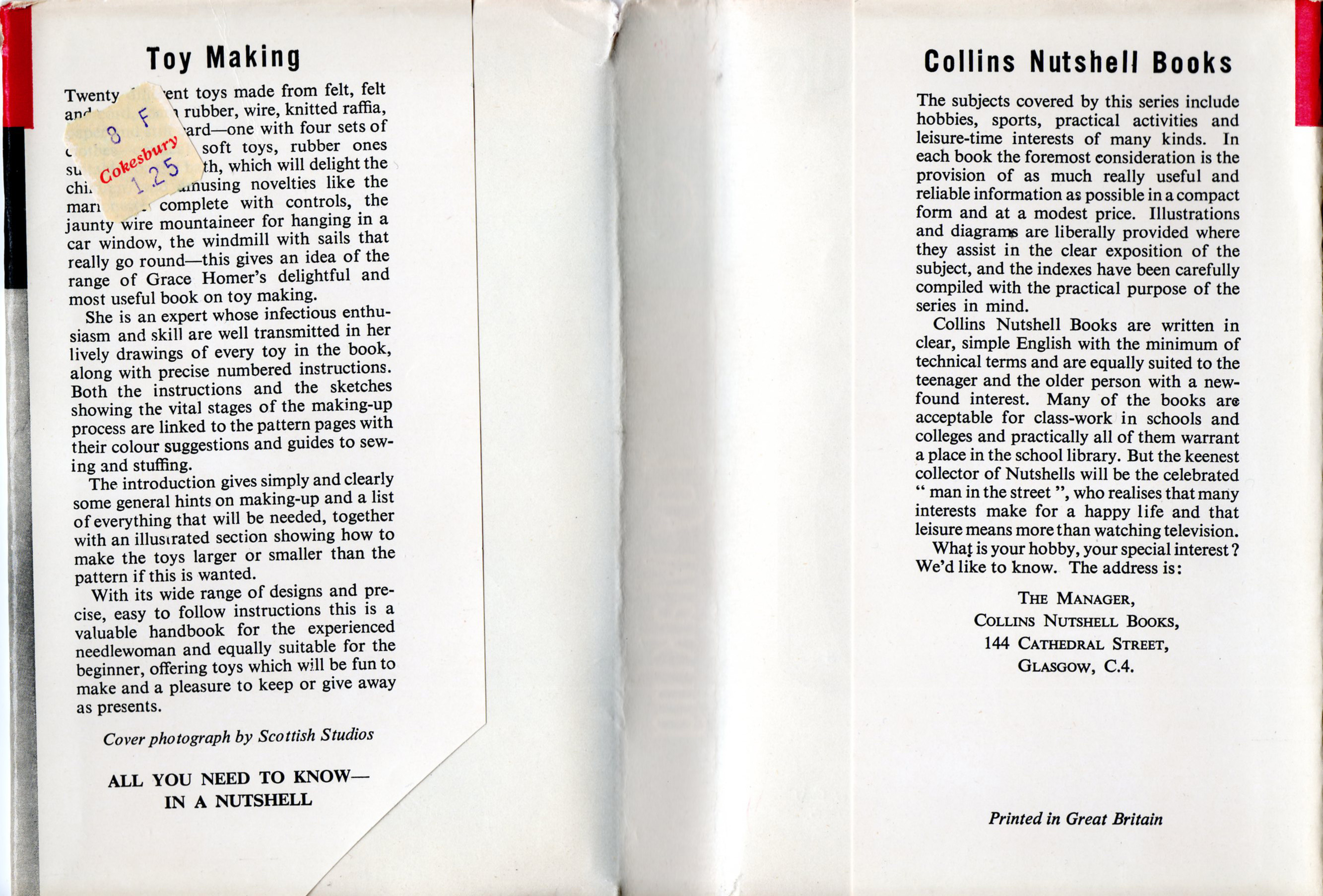
Nutshell Toy Making dustjacket flaps

This book was published in 1964 in England which is kind of obvious if you read the dustjacket flaps and do check out the other titles in the series (listed on the back of the dustjacket).

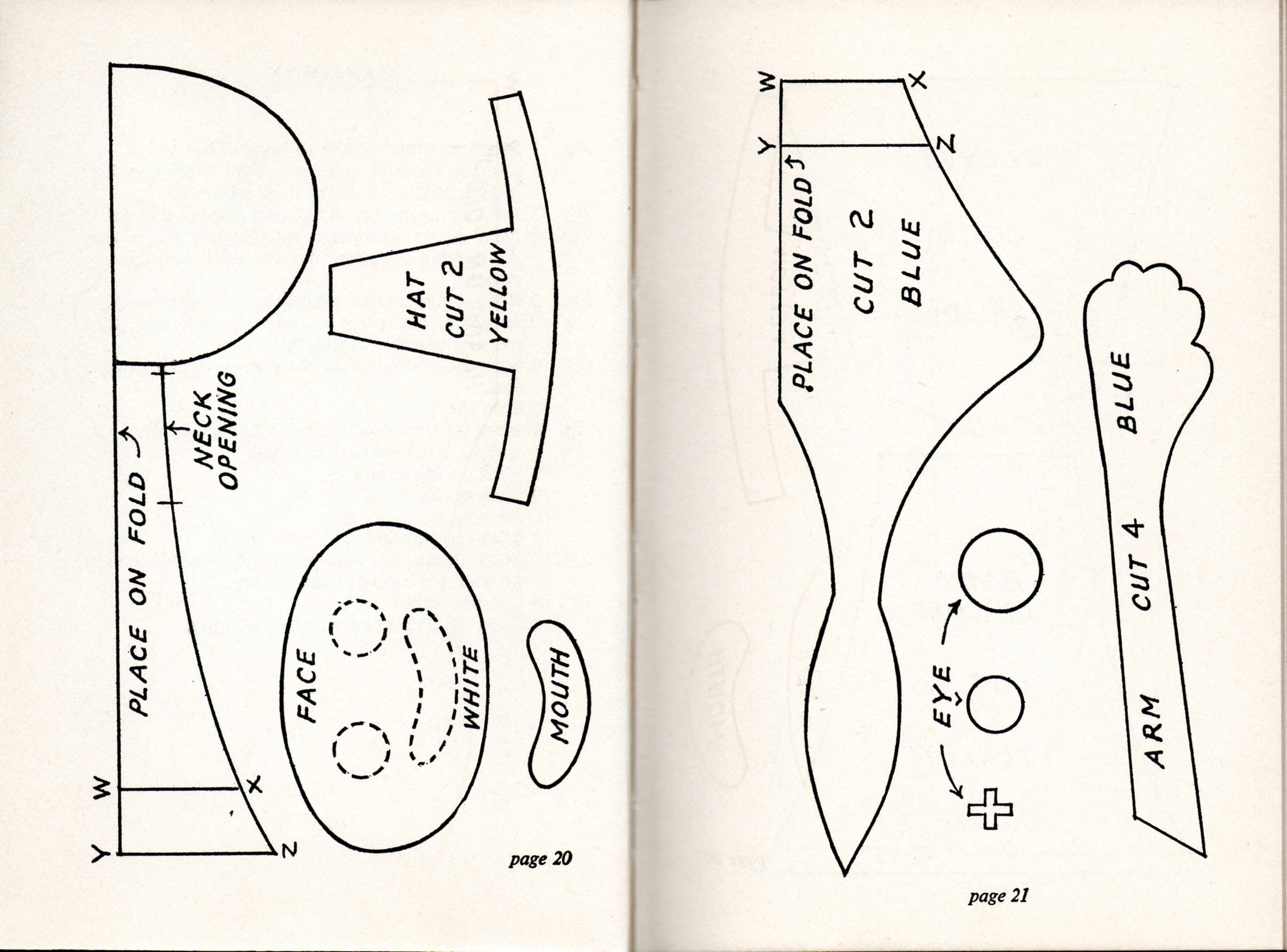
This clown pattern looks more scarecrow to me so here it is and if you don’t get it made before Thanksgiving it will still fit into your tablescape. It’s meant to be made of felt with a cardstock banjo.

Nutshell Toy Making Clown pattern 1

Nutshell Toy Making Clown pattern 2

Nutshell Toy Making Clown pattern 3

Nutshell Toy Making Clown pattern 4

Remember to click on the picture to get the full size image to copy and print out. Enjoy!


Read Full Post »

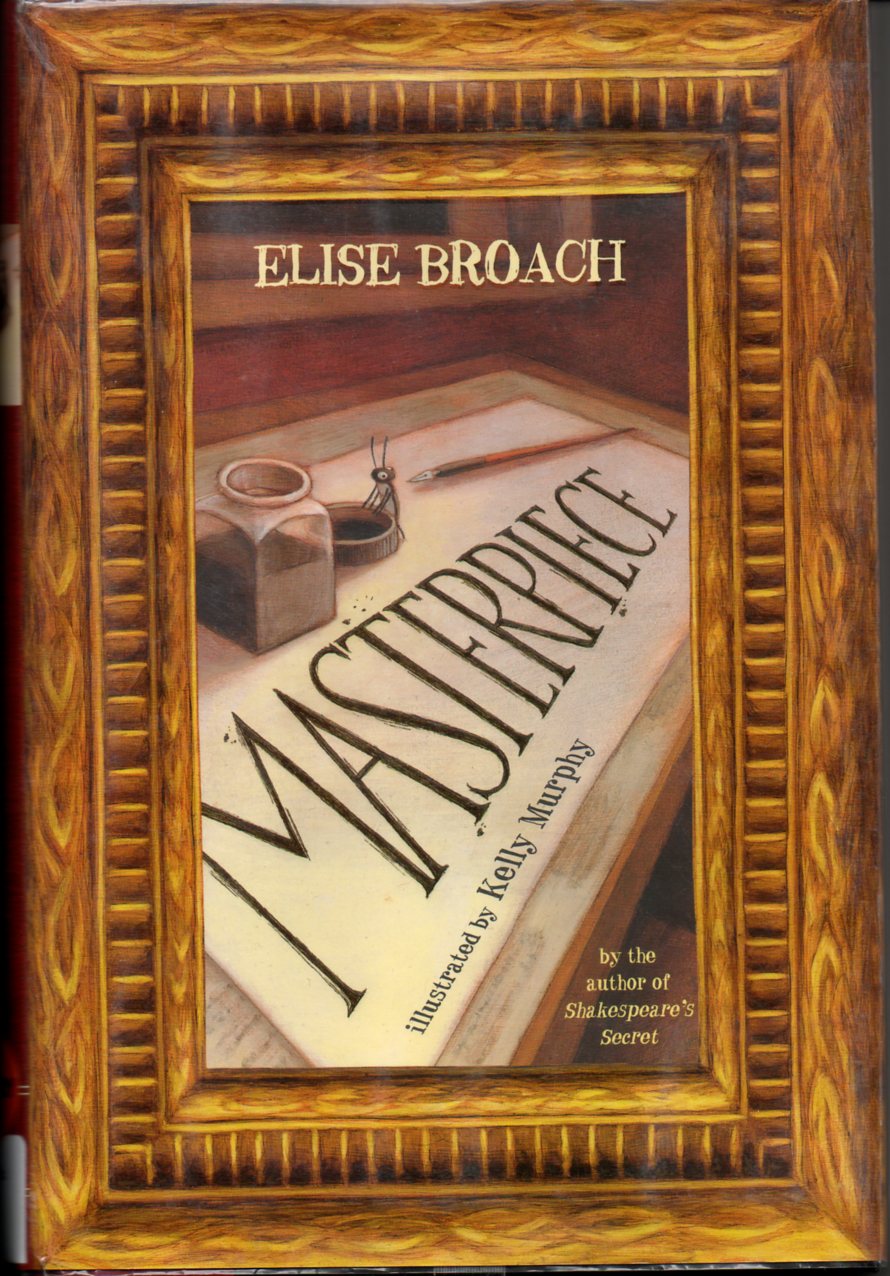
I been skiving off just lately. In actual fact this post is going out so late today because I decided to go and do just that at the park this afternoon. So I packed up a cold drink and a book and tootled down the road to my favorite “do nothing” spot and read the entire book; start to finish.

Ok, so it’s a childrens’ book but let’s not quibble — some of the finest stuff out there is/was written for children. Also let’s not forget that I tend to channel both Eloise and Little Fuzzy; some part of me will eternally be six years old. Which I believe is a Very Good Thing Indeed.

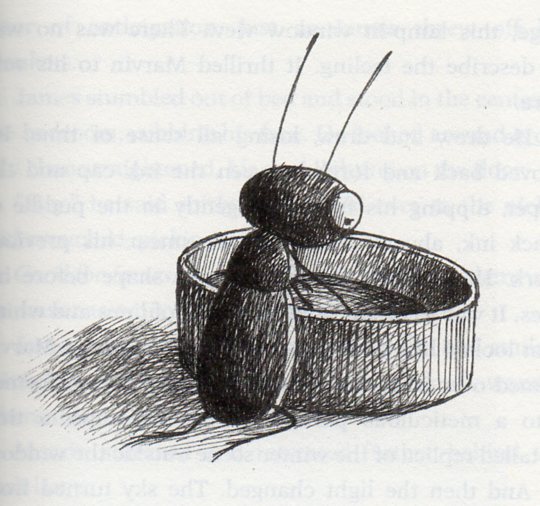
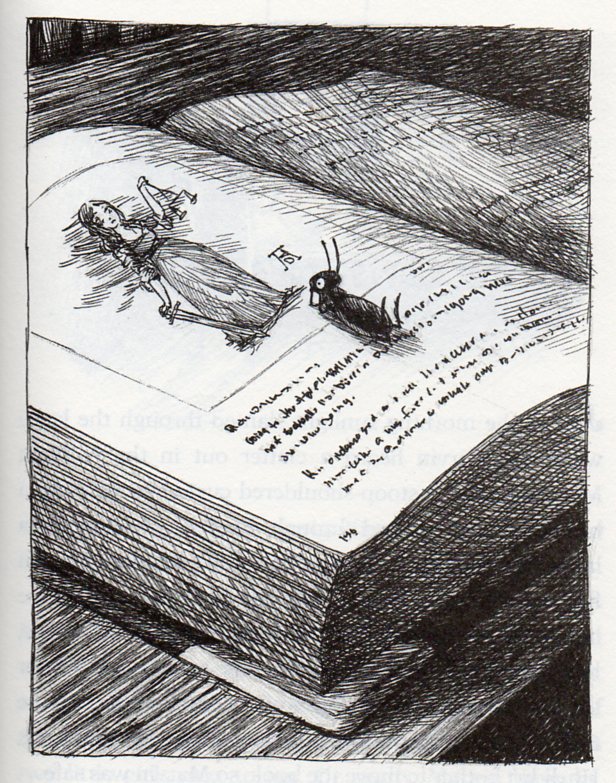
This is Marvin, he’s a beetle and this book is mostly about him. Well, and a boy named James. Marvin loves art and in the above picture he is dipping his frontmost legs into an ink bottle cap. Marvin finds that he loves to draw.

He also loves looking at drawings; specifically pen and ink drawings and etchings. The story is about Marvin and James and Albrecht Durer. Yes, that Albrecht Durer, the one who did all those Very Famous drawings and etchings.

Masterpiece is smart, funny, with plenty of action and I enjoyed it throughly. And I love this trend of action and mystery stories for children which revolve around great art/artists and/or architecture. Yes, it’s rather sneaky to expose the little beggars to art when they think they’re just reading a fun story but it’s all to the good in the long run.

Side note: the whole time I was reading this book I kept thinking about archie the cockroach who gamely leapt from typewriter key to typewriter key tapping out the poems of his human pal e.e. cummings. Which is why all those poems are in lowercase only; no little roach, however accomplished, could hold down the shift key while simultaneously jumping from letter to letter.

Read Full Post »

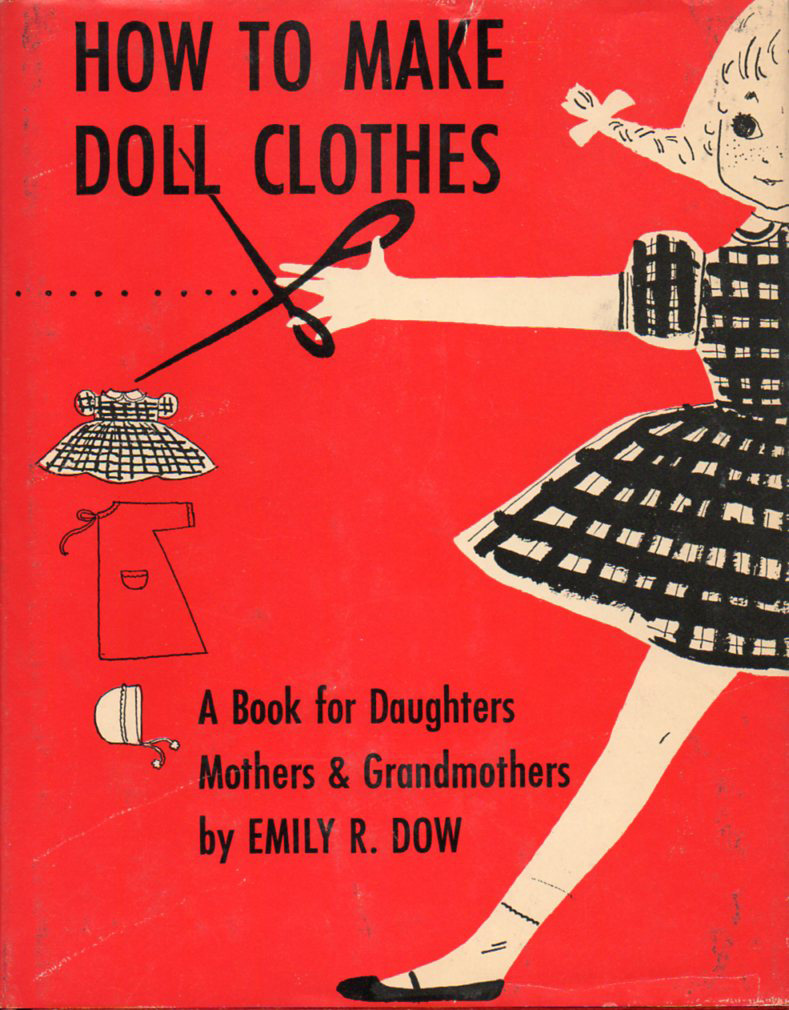
Fun Vintage Doll Clothes Book

Here is a lovely little vintage book about making clothes for your dolls. The copyright is 1953 so the language is a bit quaint but the information is surprisingly comprehensive. The book is out of print so I got my copy on ebay where it does pop up every now and again. I was lucky and got a copy with the adorable dustjacket.

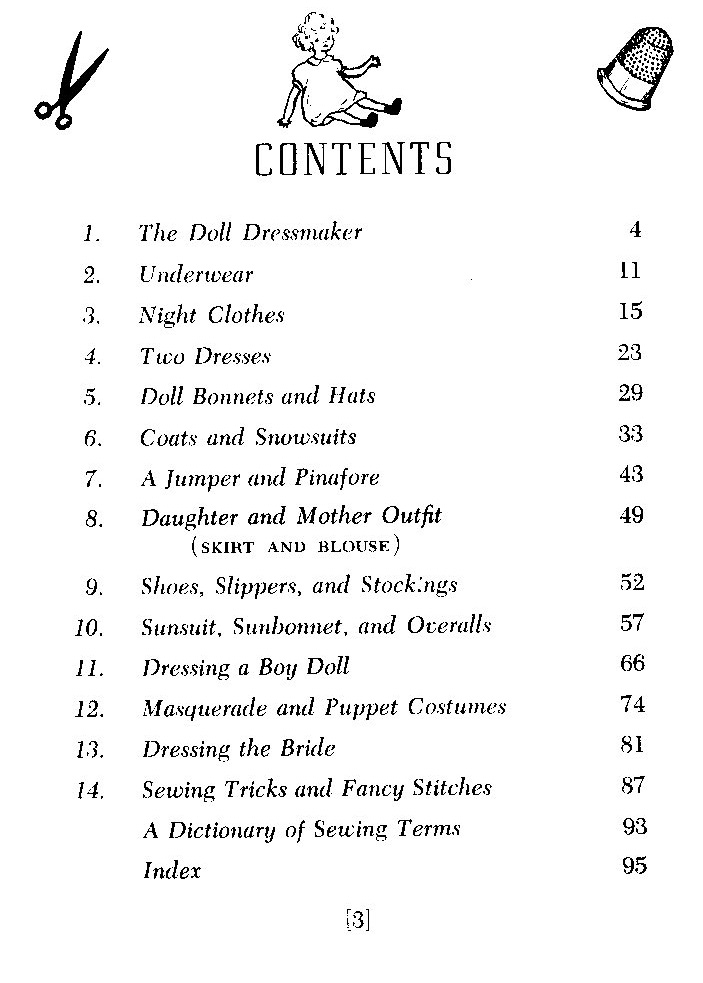
As you can see from the contents page this book is designed to give you the ability to make an entire wardrobe. No namby-pamby dancing around the need for dolly to have clothes for every occasion.

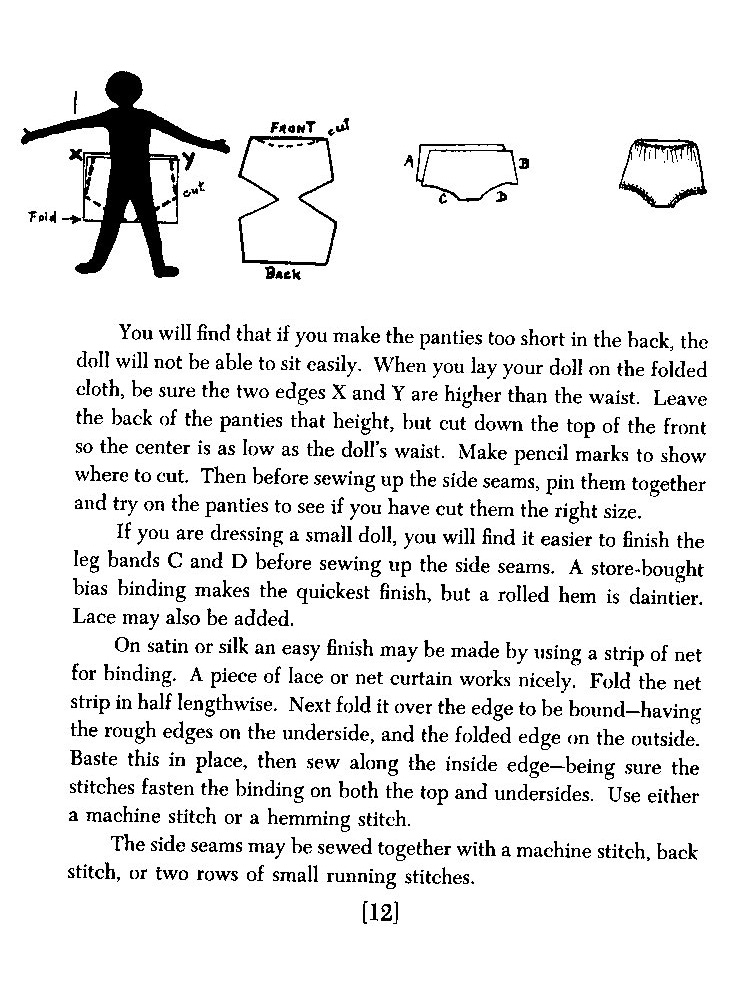
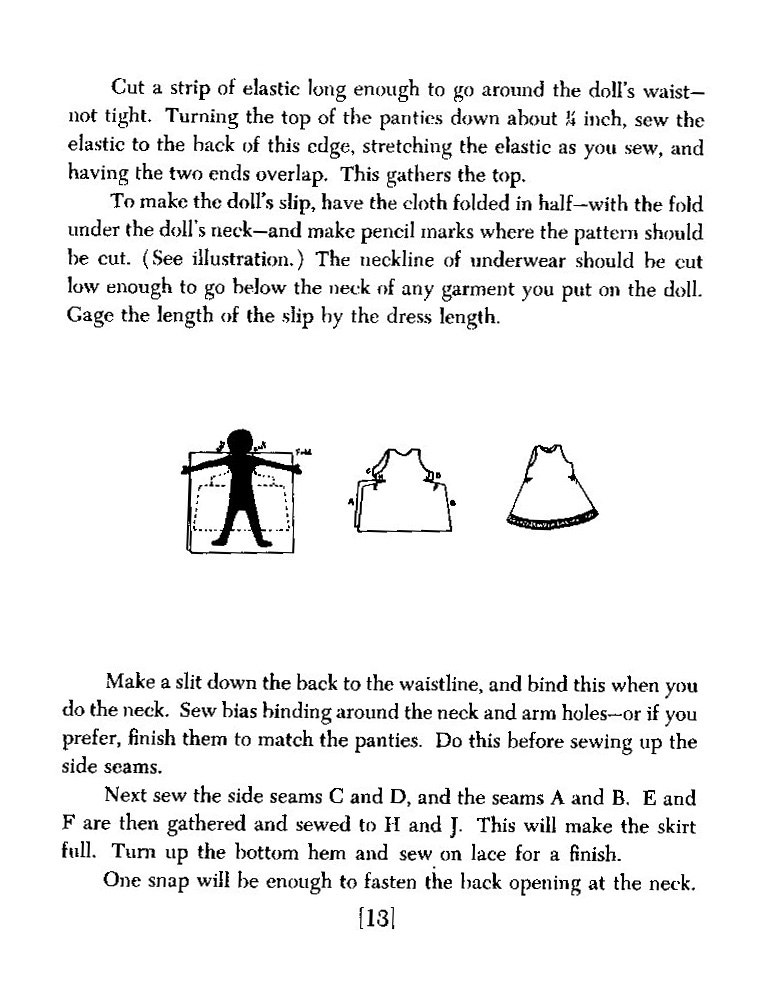
The style of the clothes are fairly simple so that they’ll be quick to make up while still having enough detail to satisfy the eye. Notice the darling slash and gather dart detail at the waist of the slip. There aren’t any ready-made patterns in the book; the idea is for you to learn to draft patterns to fit the specific doll being clothed.

The directions start out with simple pattern draping and branch out to a bit of pattern drafting for some of the patterns later in the book.

The how-to-sew information in this book is refreshingly complete. Unlike many books published today it doesn’t “dumb-down” by over-simplification. The writer assumes that the person using the book wants to make a quality product that is going to hold up to little girl usage and the little bit of extra time and effort spent doing so are well worth it.

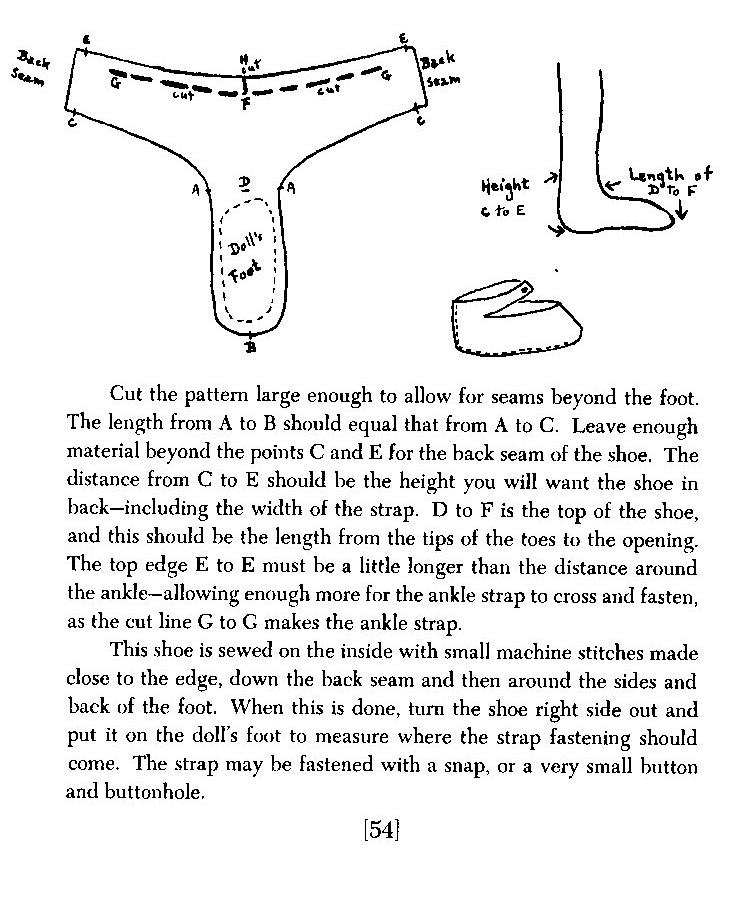
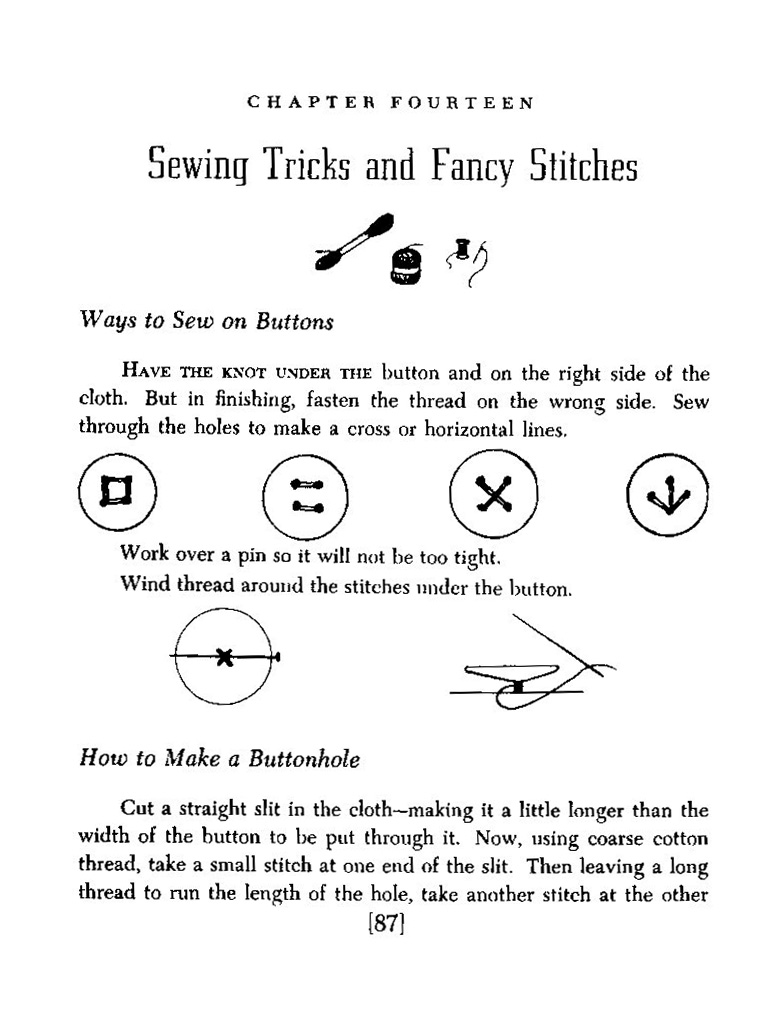
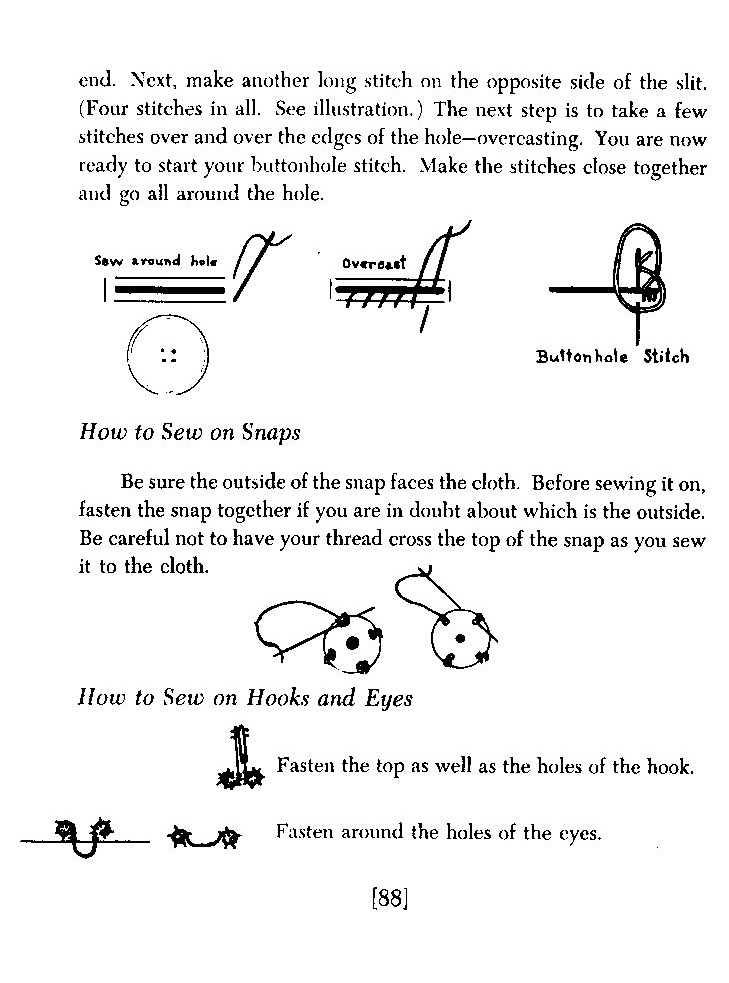
For instance this is the best explanation of how to do a proper buttonhole that I’ve ever seen in a basic-level sewing book.

The only complaint I can make is that the instructions call for the inclusion of one of my pet bugaboos: acute angle inside corners. As a child I found them a complete and total pain in the backside and to this day prefer to avoid them. I learned early to eliminate an acute angle beneath the arm or between the legs by breaking up the pattern into more pieces to obtain that vital fray-and-bunching preventing seam allowance.

On the up-side it does teach how to do linings and how to bind an edge. Both of which eliminate any need for dealing with my other pet bugaboo: narrow hems on curved edges. Too fiddley by far for a child and again I’ll go a long way out of my path to avoid them now.

So if you enjoyed this post, get yourself access to a copy of this book — you may just end up wanting one for your very own (try ebay or amazon marketplace). FYI, Michigan residents: the Michigan library system has copies of this available, your local librarian can get one through the inter-library loan system. Or for those of you in the know; request your own loan via melcat (www.mel.org). Ooooh Yes! I do so love the library.

Read Full Post »

« Newer Posts