Feeds:
Posts
Comments

The Popover Family

Among the many things I like are books about dolls and their houses (and their people). The Popover Family is such a book, a collection of short stories arrayed as a novel, telling of their many adventures. Comforting adventures with much love and friendship with a dash of excitement. Like many vintage books (this is from 1927) the language is delightfully dated. I’m also inordinately fond of decorated endsheets. Like these:
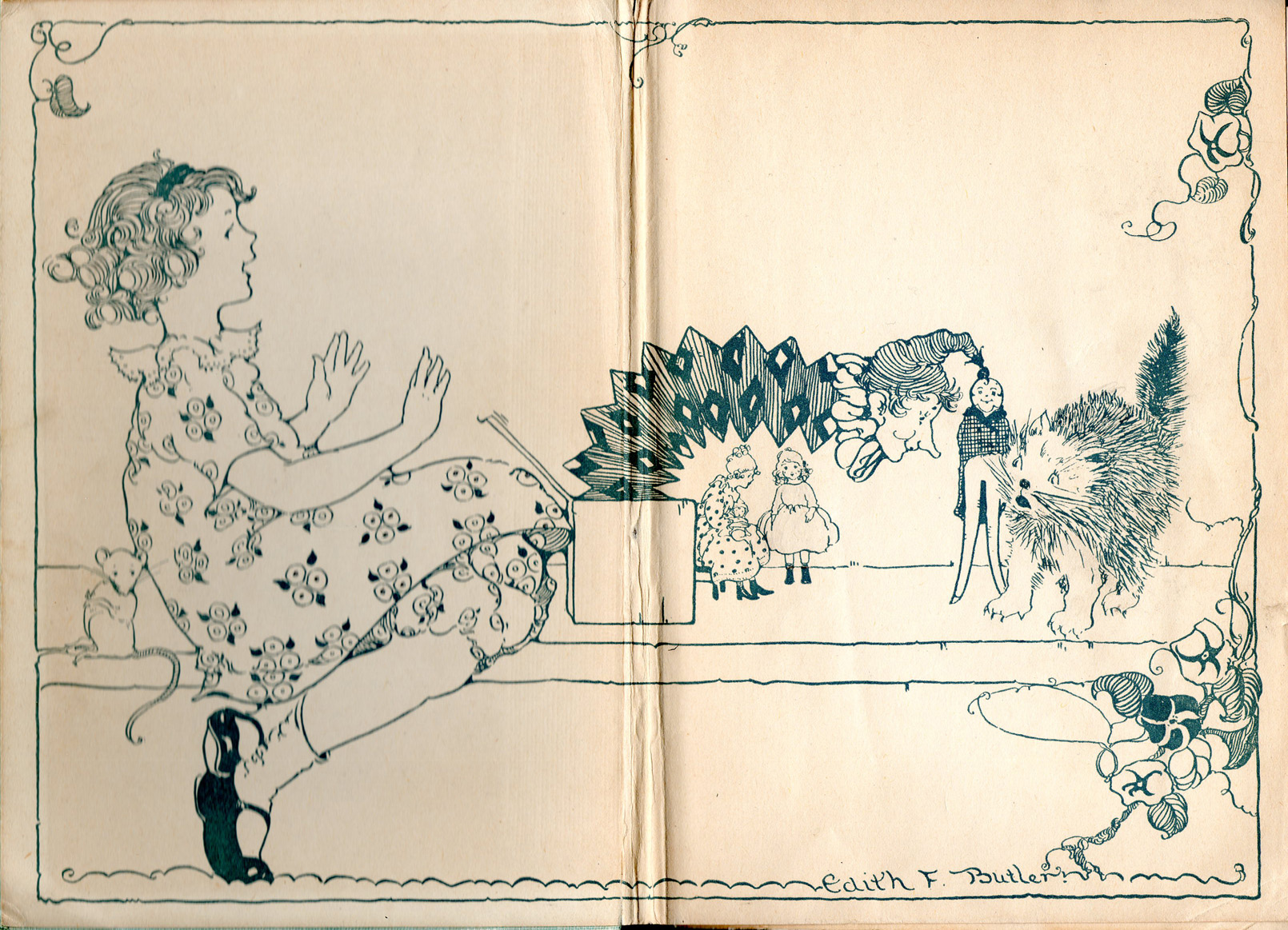
popover family endsheet

What I find particularly charming about the Popover Family is that fully half the family are improvised dolls. The mother and daughter are regular manufactured dolls; the mother is said to be “a little china doll” and the daughter is stated to be “a little girl doll” which might indicate she’s a bisque doll. But Father Popover and Baby Popover (whose long name is Loo-Loo) are improvised, that is, made of found or as is currently fashionable upcycled objects.

“Mr. Popover was a clothes-pin, tall and slim and brown. His head was small, but his legs were long, and of them he was very, very proud.”

“Baby Popover was a chubby glass bottle, smooth and long and round. He wore a little white cape and a white pointed cap tied over the cork that made his head. He lay in a little wooden cradle, as snug as could be, and he was never so good and quiet as when someone was rocking him to and fro.”
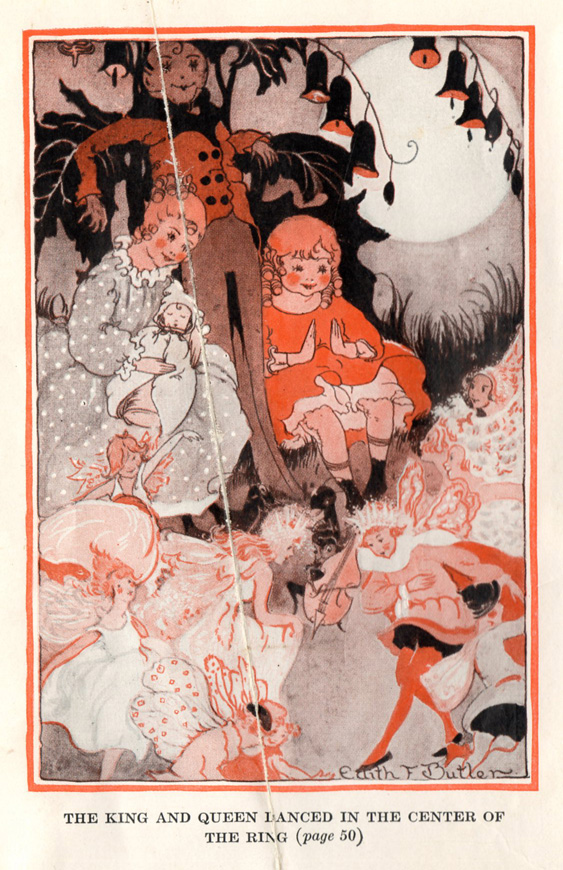
the popover family

As you can see from the above illustration, there are also fairies in this book. Only in one story but that story is rather atypical for a fairy story, involving a domestic crisis wherein the Fairy Queen’s baby won’t stop screaming unless she holds him so she can’t dance at the ball. Mother and Loo-Loo Popover come to the rescue, the crisis resolved and a jolly time is had by all.

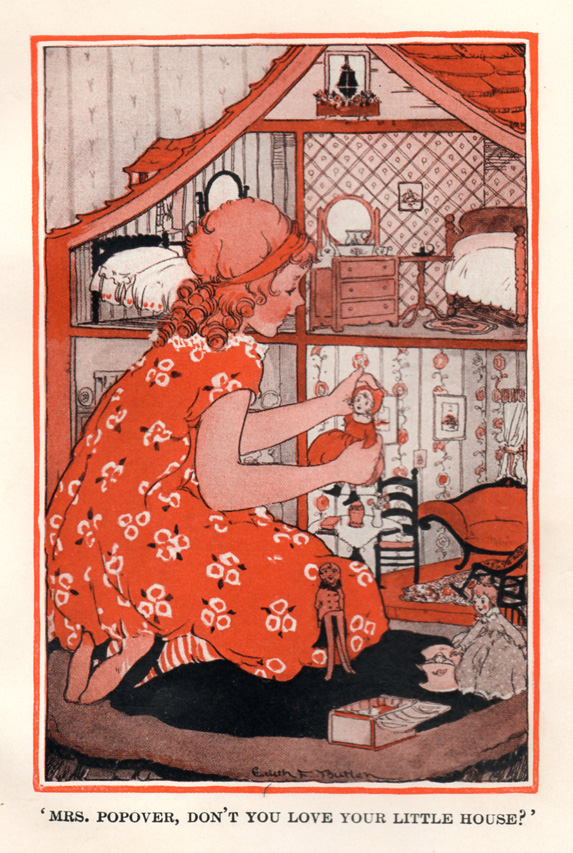
There is a decided emphasis on the power of the imagination in books like these. As an example, look closely at their house.
popover family dollhouse

There are no internal doors, no stairs, and overall a general disregard for having things be in the same scale. So the imagination takes over and then anything, anything at all becomes possible. Tea parties with a feast of crumbs, midnight rides on a mouse named Brownie, and a baby who gets colic after his head came off in the bath and he filled up with water. And that is truly magical.

My copy of The Popover Family is battered and worn, the binding is loose, there are copious pencil marking on the text and it’s missing one of the four illustrations (the last, which I think might be of when Santa visits). I love it just the same.
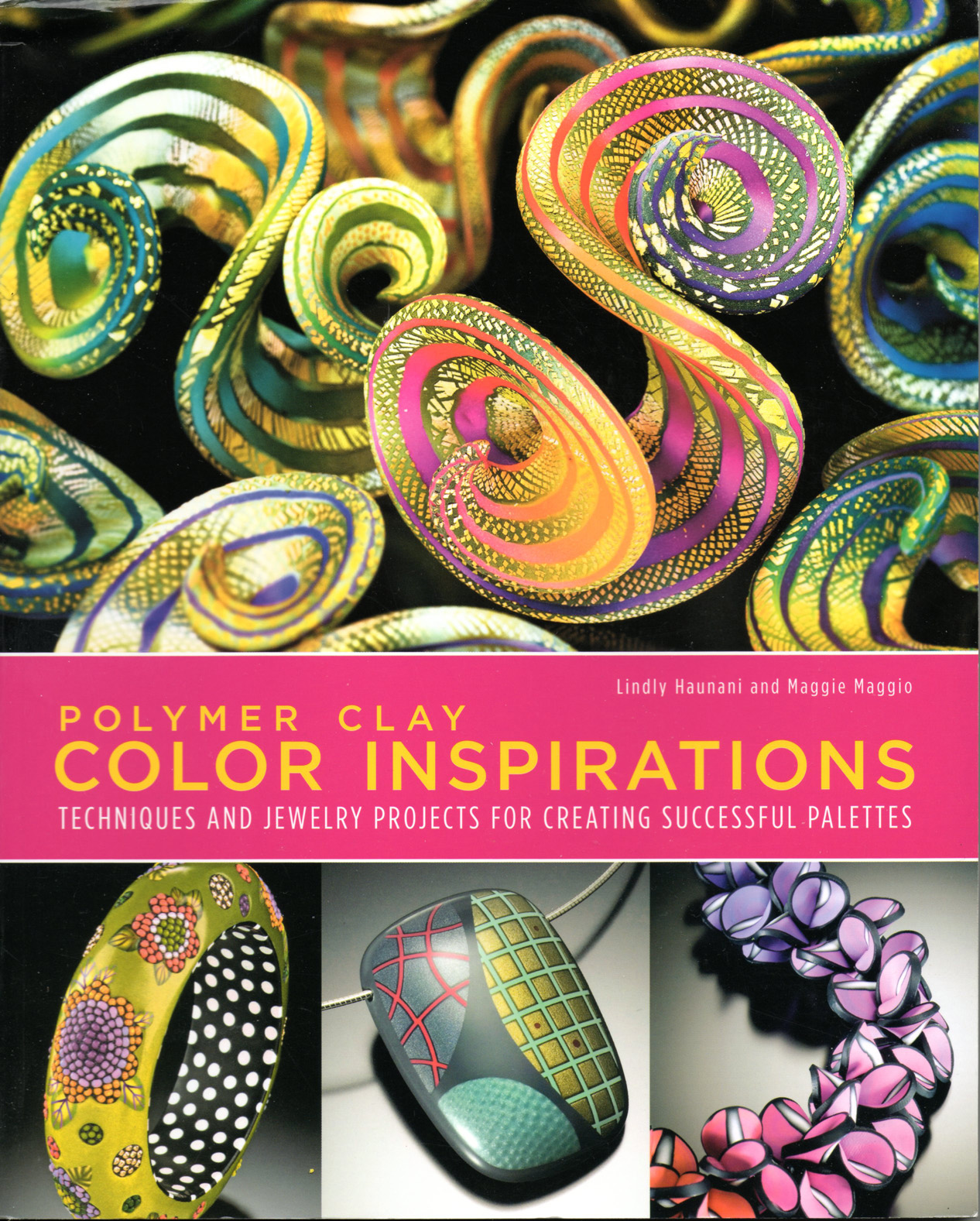
One of the things I liked best about art school was color theory. So when (several years ago) I was sent a link to a video clip showing the process of mixing useful color scales in polymer clay I got interested and starting making a few. As too often happens I got involved with other things and the project got put aside. Then I found that the artist in the video clip had published a book:

polymer clay color inspirations

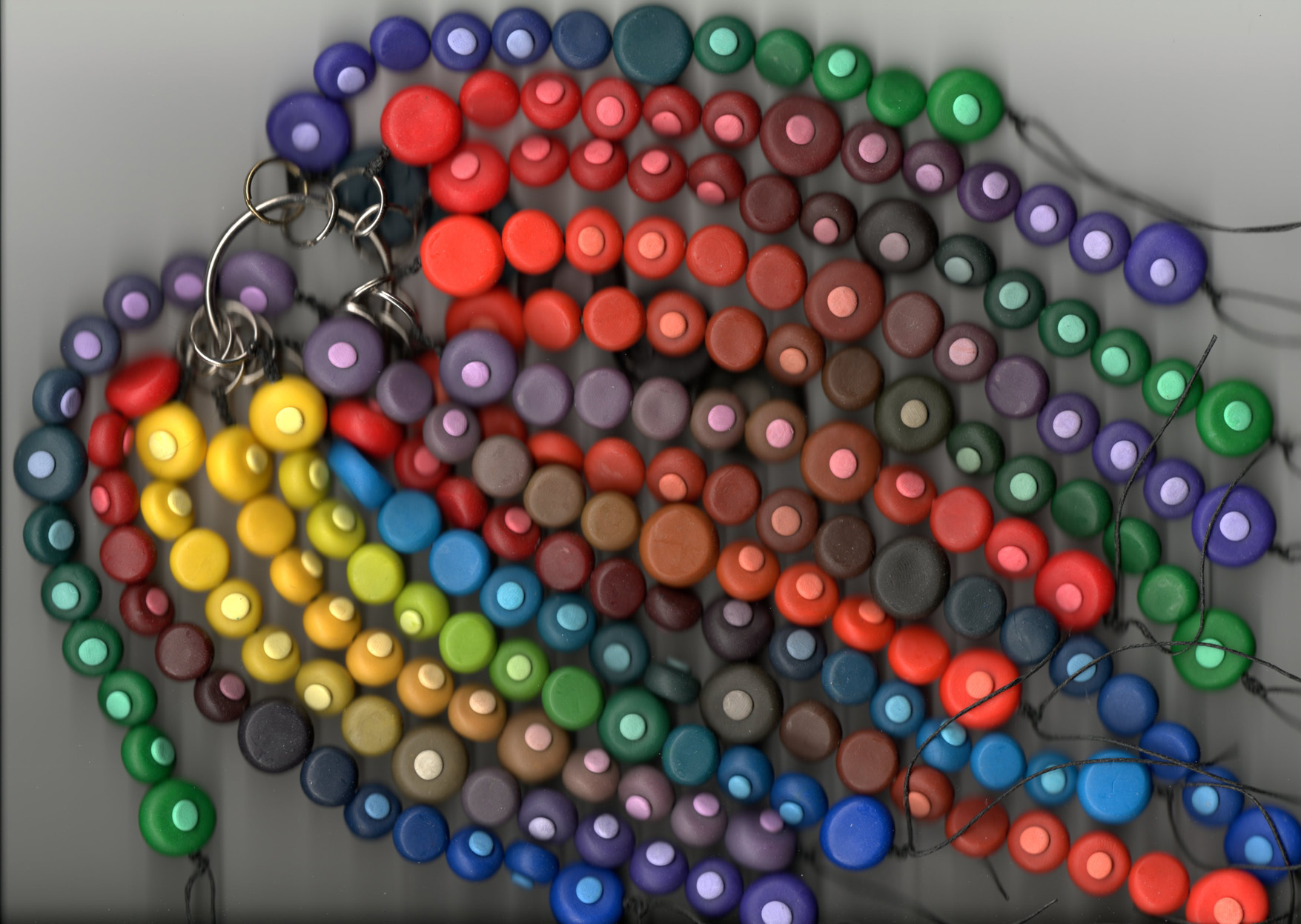
Wow! If you are at all interested in color and you use polymer clay, you should buy this book. If you’ve never studied the science behind color and it’s use this book will open doors to a new world. If you already know color theory and how/why it works this book will inspire you to push yourself and your work further. There are a number of color mixing exercises which result different types of color palette tools. Here are the results of the tool I made:

polymer clay rainbow beads

A Rainbow hued group of color scale beads.

polymer clay chromatic beads

And a Chromatic gray (or muddy) hued group of color scale beads. My personal favorites.

I used Kato clay to make these beads which are mixed in a geometric progression of one color to another. Using the geometric progression proportional method covered in the book saves a lot of clay and results in very usable color palettes. I used Kato exclusively because it is formulated specifically for mixing colors and doesn’t experience the hue impurity and color shift problems encountered with other brands.

Here’s what I learned while making these scales.

1) A pasta machine is an absolute necessity. I’d already bought mine years ago to save my hands/wrists from the trauma of conditioning clay but personally wouldn’t even attempt this project without one.

2) Get all the really tedious bits done first. Condition, sheet and cut all your clay into measured bits (I used a 3/4″ square cutter at the thickest sheet setting). Stack all the little squares, wrap up and store in zip-lock baggies. Do this in lightest to darkest color order. Then when you’re ready to mix a few strands everything is ready and measured.

3) Pierce the beads as you finish each mixed strand; I left a few strands until the next day and several beads cracked. Place them on the baking sheet in the mixing order and string them directly from the baking sheet. Order must be preserved! Otherwise you won’t know the correct proportion of colors to mix and that is the whole point of making them in the first place.

4) Choose something very strong to string them. I used a doubled strand of black waxed linen thread from the jewelry department of the local craft store with a double jump ring header so I could bunch them on split book rings to keep them organized.

My beads are made using an onlaid color dot of 50/50 white and the color of the base bead instead of the inlaid color dot technique used in the book. Again I conditioned and sheeted (at a thin setting) all the white I needed then stored it between waxed paper on paper plates to be used as needed. I used a section of plastic drinking straw as a cutter for these pastel onlays.

While the initial purpose of making these color scale beads was to end up with a tool for selecting color mixes I have to say that the end product is a very satisfying and aesthetically pleasant handful of science. Beautiful, colorful science.

Less Than Fantastic

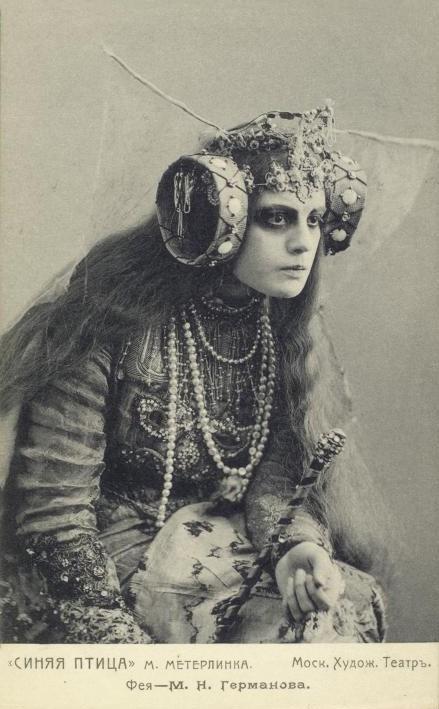
spooky chick

Ever feel like things just aren’t going the way you’d hoped? Perhaps this next week will be better.

Here for your Halloween enjoyment is a little book from my collection. Literally  little; this puppy measures 4-1/8″ x 6-1/8″. It fits very nicely in the hand.

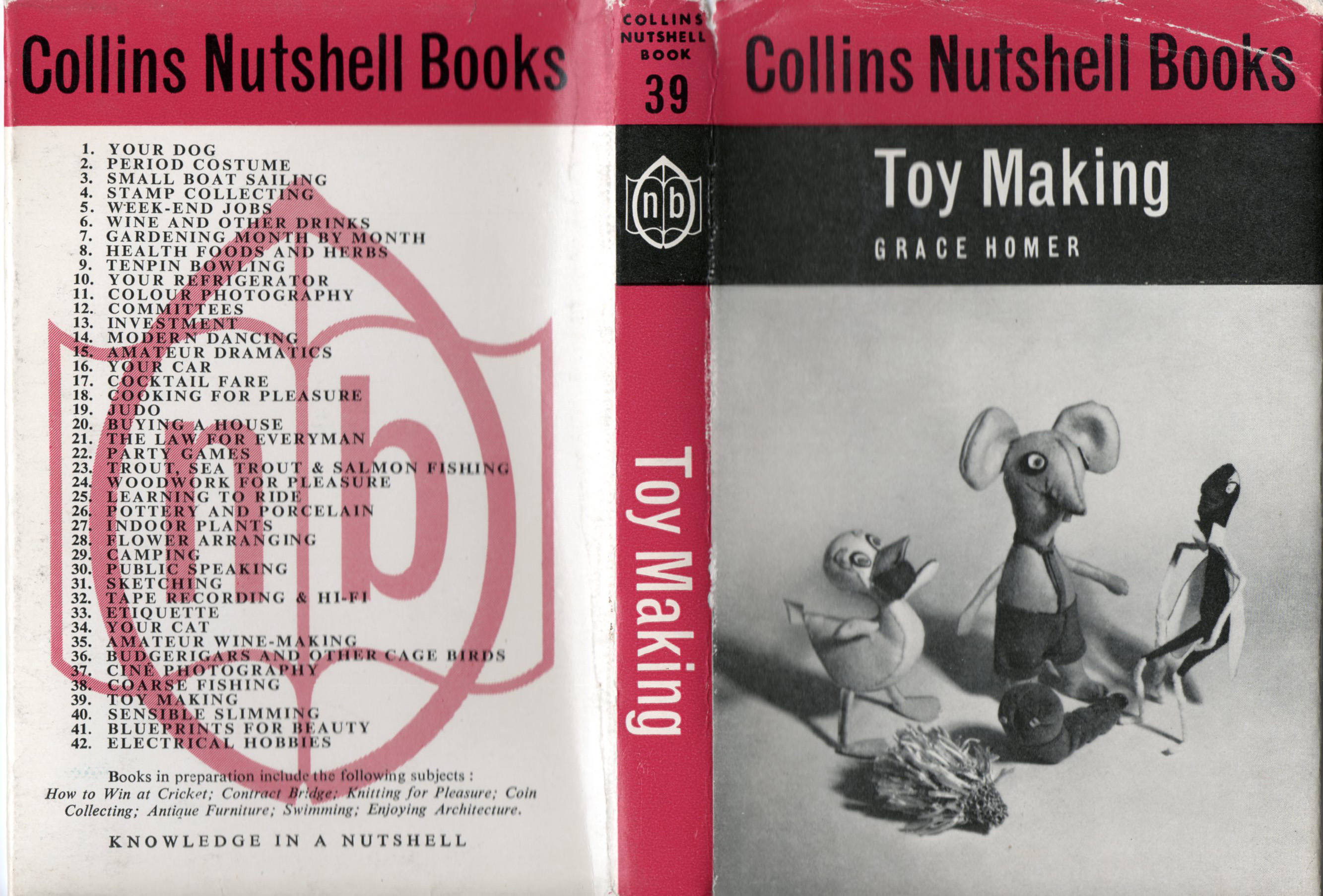
Nutshell Toy Making dustjacket

I picked this up because I really liked how demented the animals on the cover look.

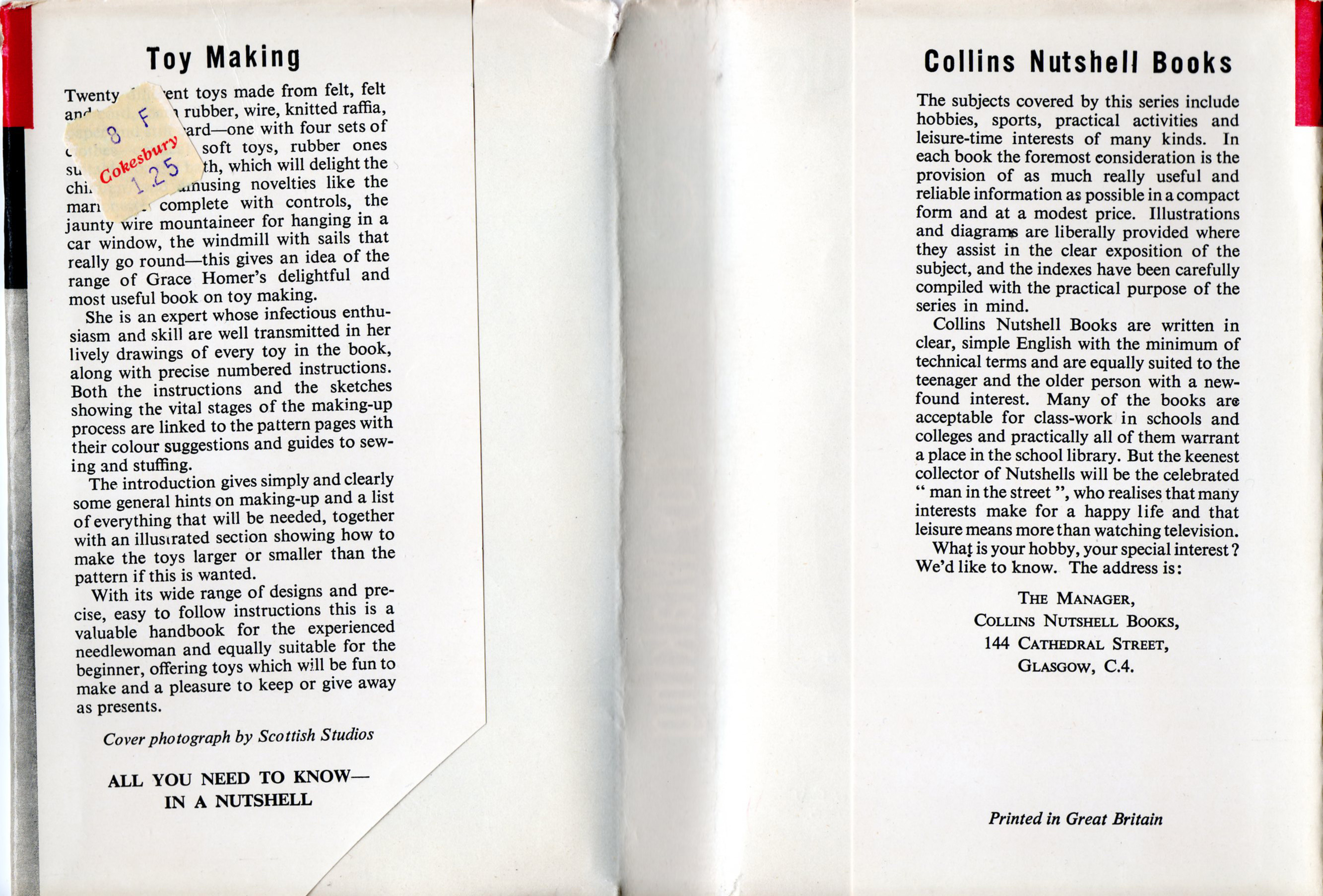
Nutshell Toy Making dustjacket flaps

This book was published in 1964 in England which is kind of obvious if you read the dustjacket flaps and do check out the other titles in the series (listed on the back of the dustjacket).

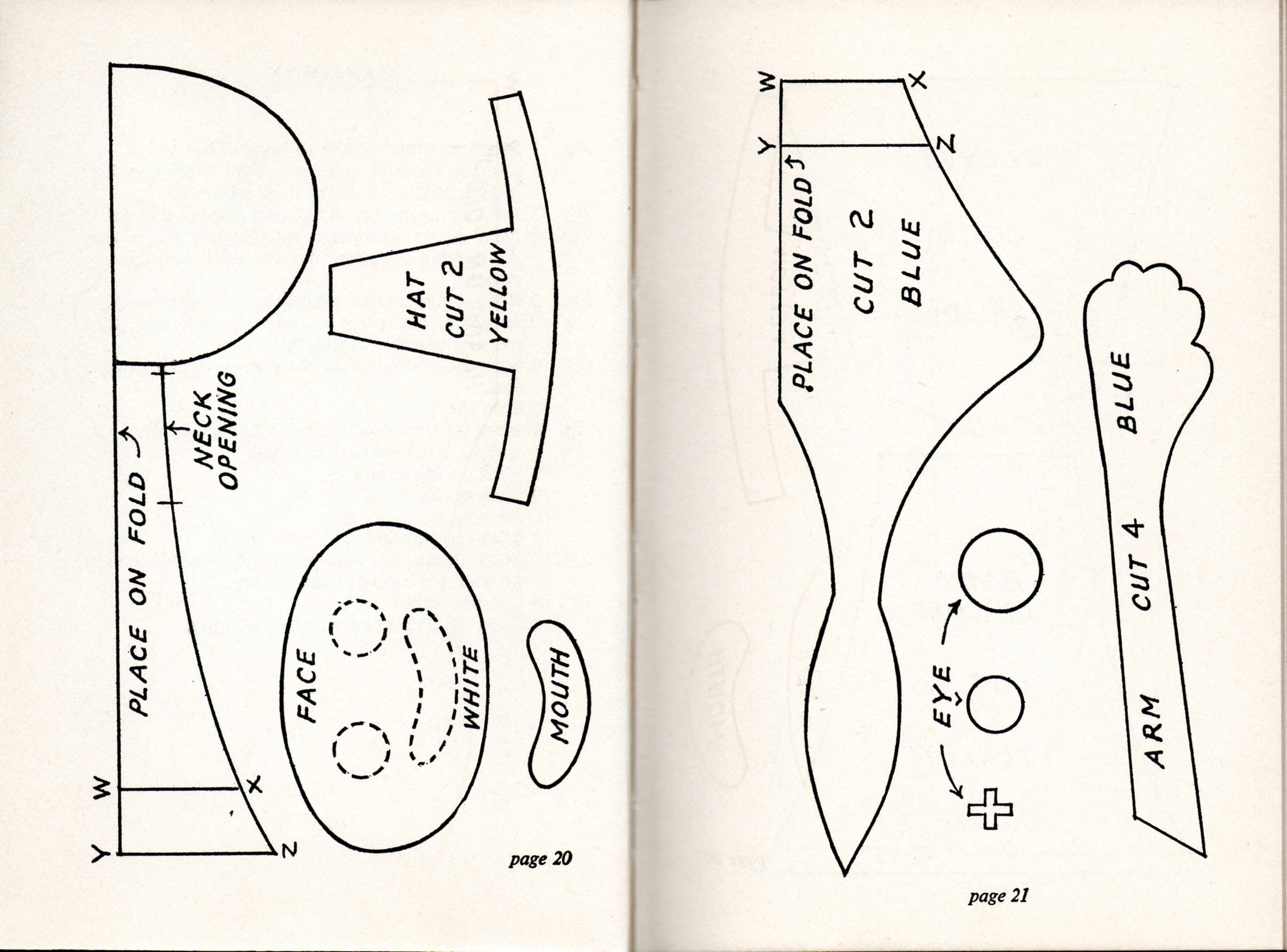
This clown pattern looks more scarecrow to me so here it is and if you don’t get it made before Thanksgiving it will still fit into your tablescape. It’s meant to be made of felt with a cardstock banjo.

Nutshell Toy Making Clown pattern 1

Nutshell Toy Making Clown pattern 2

Nutshell Toy Making Clown pattern 3

Nutshell Toy Making Clown pattern 4

Remember to click on the picture to get the full size image to copy and print out. Enjoy!


Inspiration

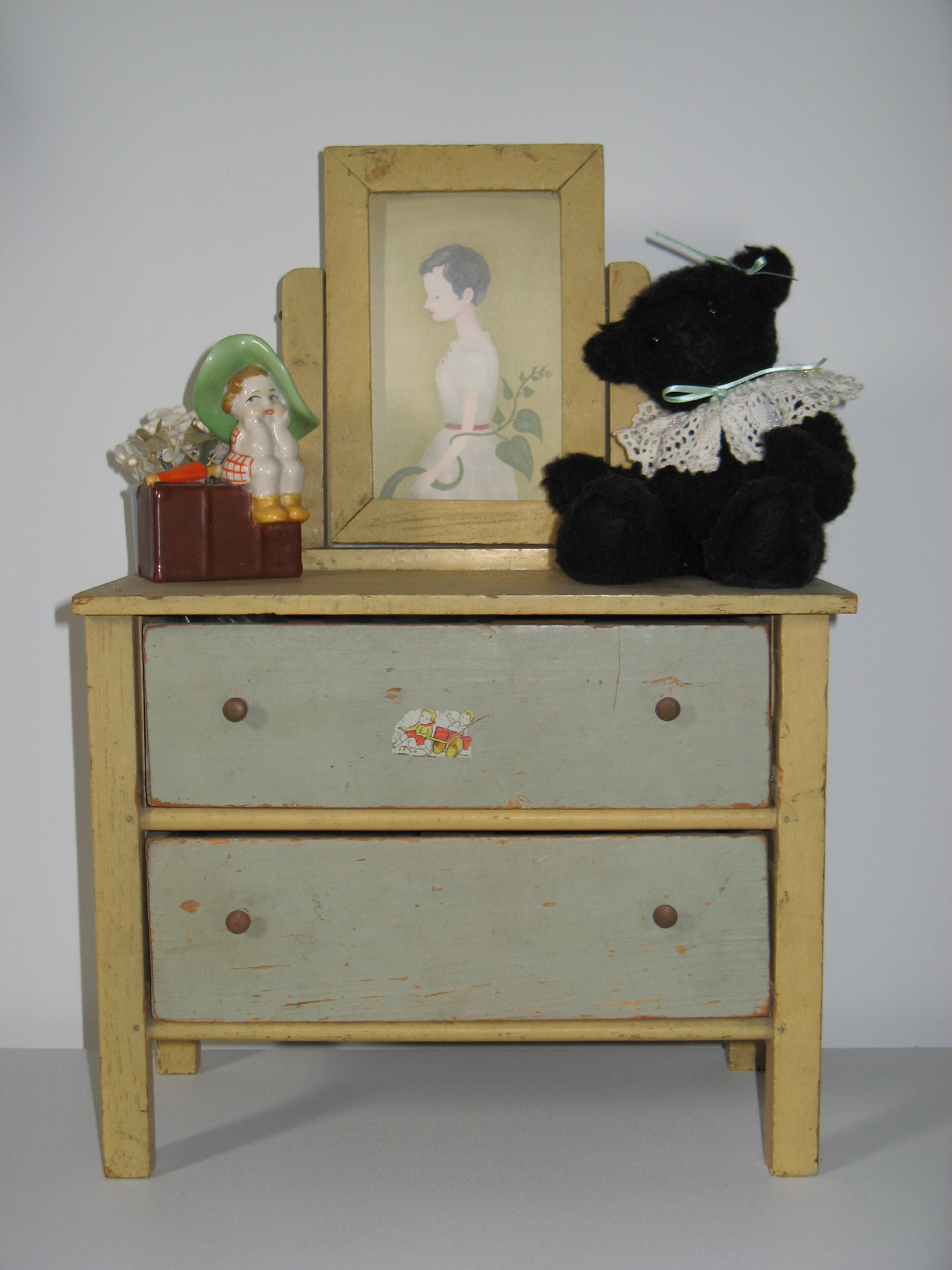
Every morning when I wake up, this is what I see:

yellow doll dresser

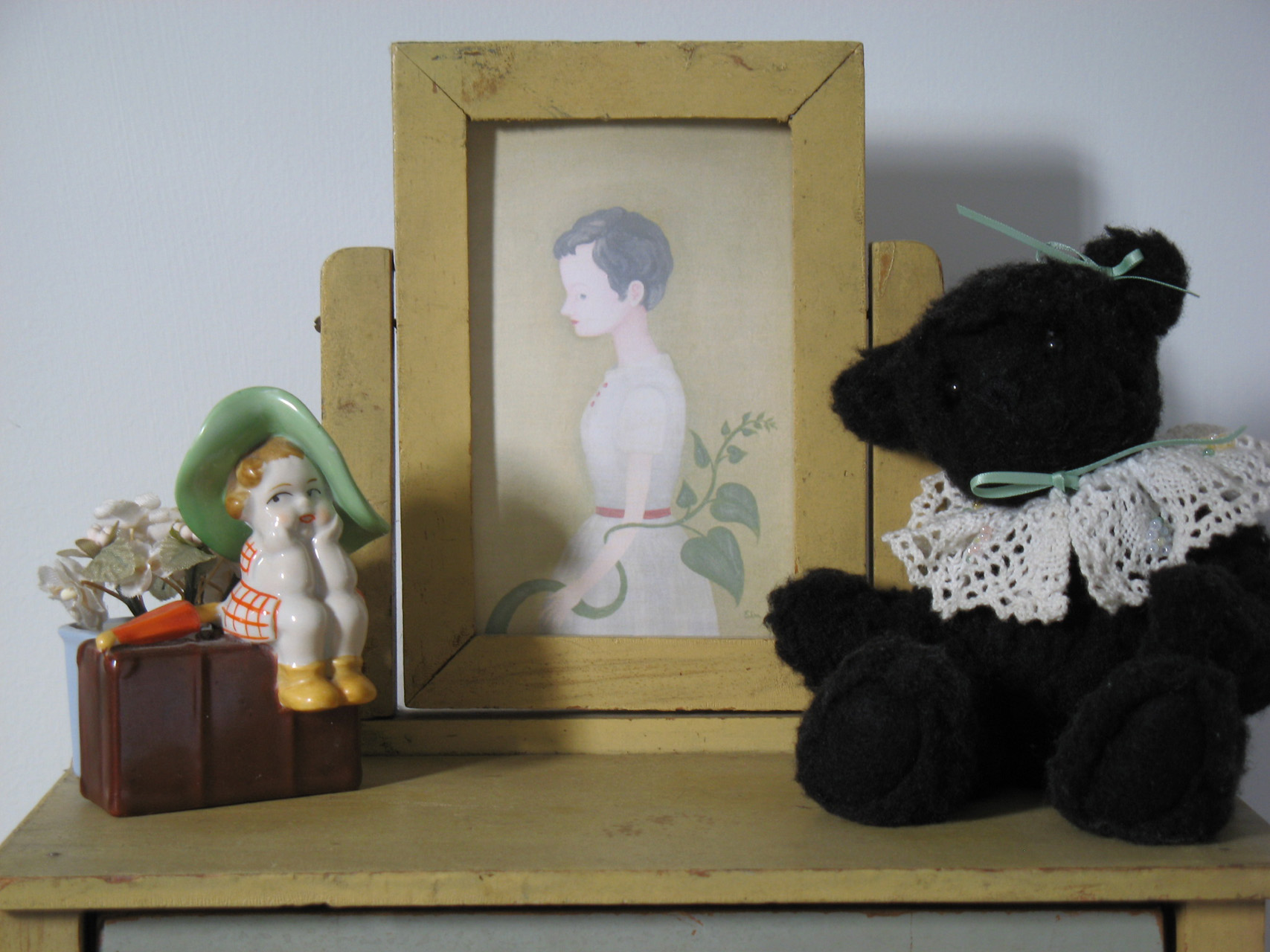
It’s a vintage dolls’ dresser that I’ve had for years. When I got it the mirror was missing from the swivel frame on the top and I never replaced it; it sat empty for a long, long time. Then my friend Elsa Mora blogged about a painting called Alert that she had done for an exhibit of her art. I knew right away where I needed to put a copy of that painting and with Elsa’s permission I printed it out and then the dresser finally was complete.

yellow doll dresser detail

This reminds me every day to stay awake, pay attention, appreciate what I have and let go what I have lost. There is great wisdom and no small amount of comfort in this piece.

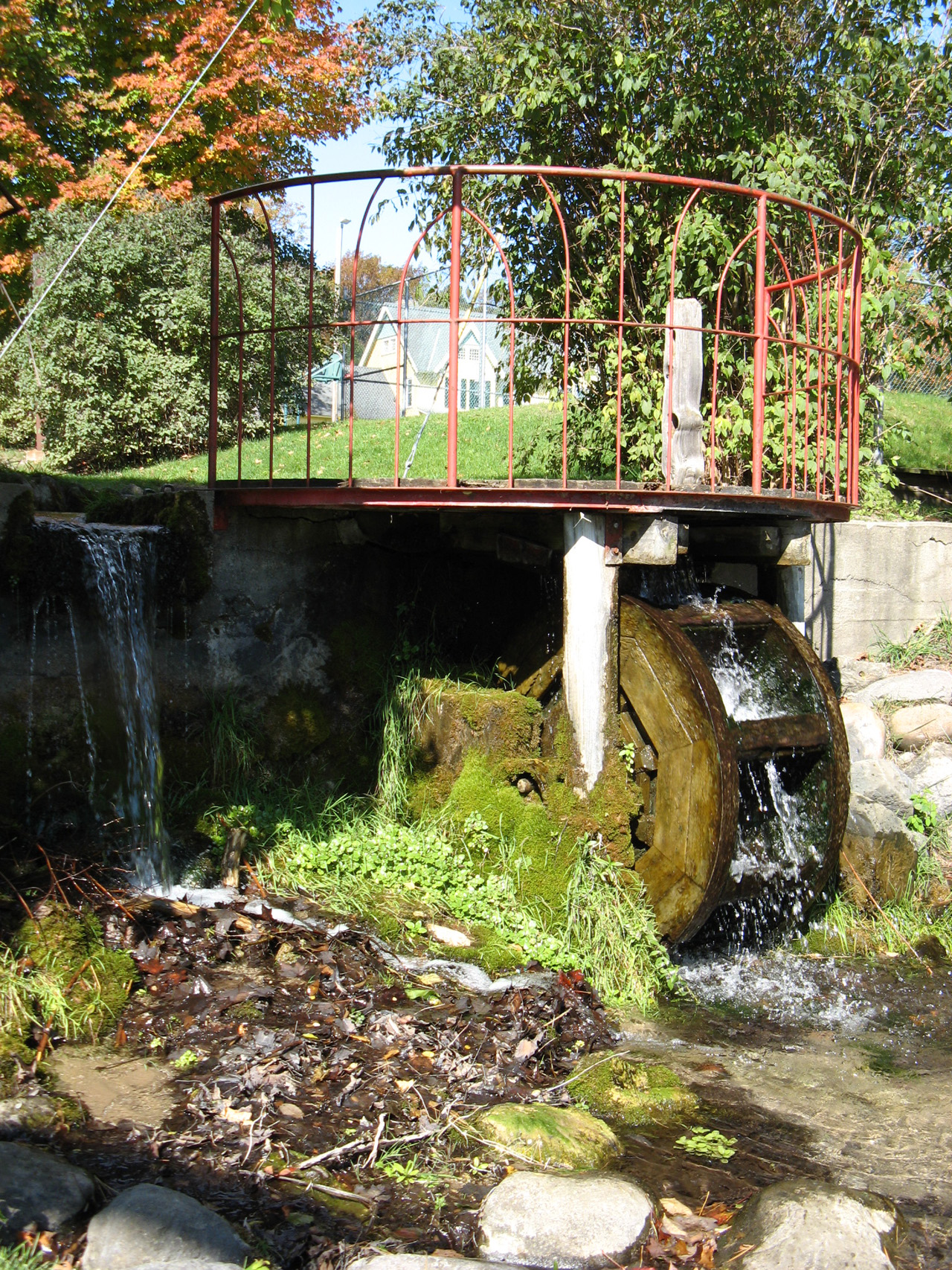
First day of our annual vacation and we’d had a delicious brunch at the 45th Parallel (best breakfast spot ever); moved our car to our favorite shady parking spot and I’d taken a snap of our favorite vacation visual.

This waterwheel, which we love and as a bonus it makes a delightful chuggy, chuggy sound as it turns.

Then I did a braindead thing: I tripped, couldn’t catch my balance (damn you, infernal inner ear disease) and took an ugly fall, smacked down hard on the asphalt, rolled onto my back and just lay there hoping no one in a giant SUV was heading down the marina drive at that exact moment on account of that’s where I happened to be sprawled out.

Here’s the adventure part: I now know exactly where the hospital in Traverse City is. My right knee had a rather alarming and totally freaky bloop sticking out of one side so John fetched the car and off we went down the road to the emergency room so I could get an x-ray. The upside is that because we were on vacation the hospital was only 15 miles away and we were only at the hospital for 3 hours. At home the hospital is 40 miles away and the wait time to see a doctor would probably have been at least 3 hours.

The final result is that I didn’t break or tear anything and my knee will (eventually) heal on it’s own. The freaky bloop is still there (but smaller) and I’m still limping a bit (especially on stairs or steps). I also kinda messed up my right hand but it’s getting less painful and stiff and I can actually grip things this week. Most of the bruises are at least starting to fade and the scrapes are healing up.

We didn’t let this ruin our vacation. although we had to eliminate a couple of activities and it reduced our strolling speed to a gimpy crawl. We still had a really good relaxing time. As a karmic payback the weather was unseasonably and unexpectedly warm — really perfect actually.

More good news, I did manage to partially twist so I didn’t land directly on my face (face missed out on injury all together) and I did automatically jettison the skull bag at exactly the right moment so that the camera inside it did not sustain any damage (luckily neither did the bag). I’m only pissed that I didn’t manage to compensate enough to avoid anything more than scrapes and slight bruises. In case this whole paragraph sounds a little odd: I went through some training as a child to automatically react in certain patterns when in a falling-down situation so as to minimize injury (I think it’s still a first year requirement at Hoggwarts or maybe that was Jedi school — Ha!).

Next week: back to regular (ghastly thought; I almost typed normal) blog activities.

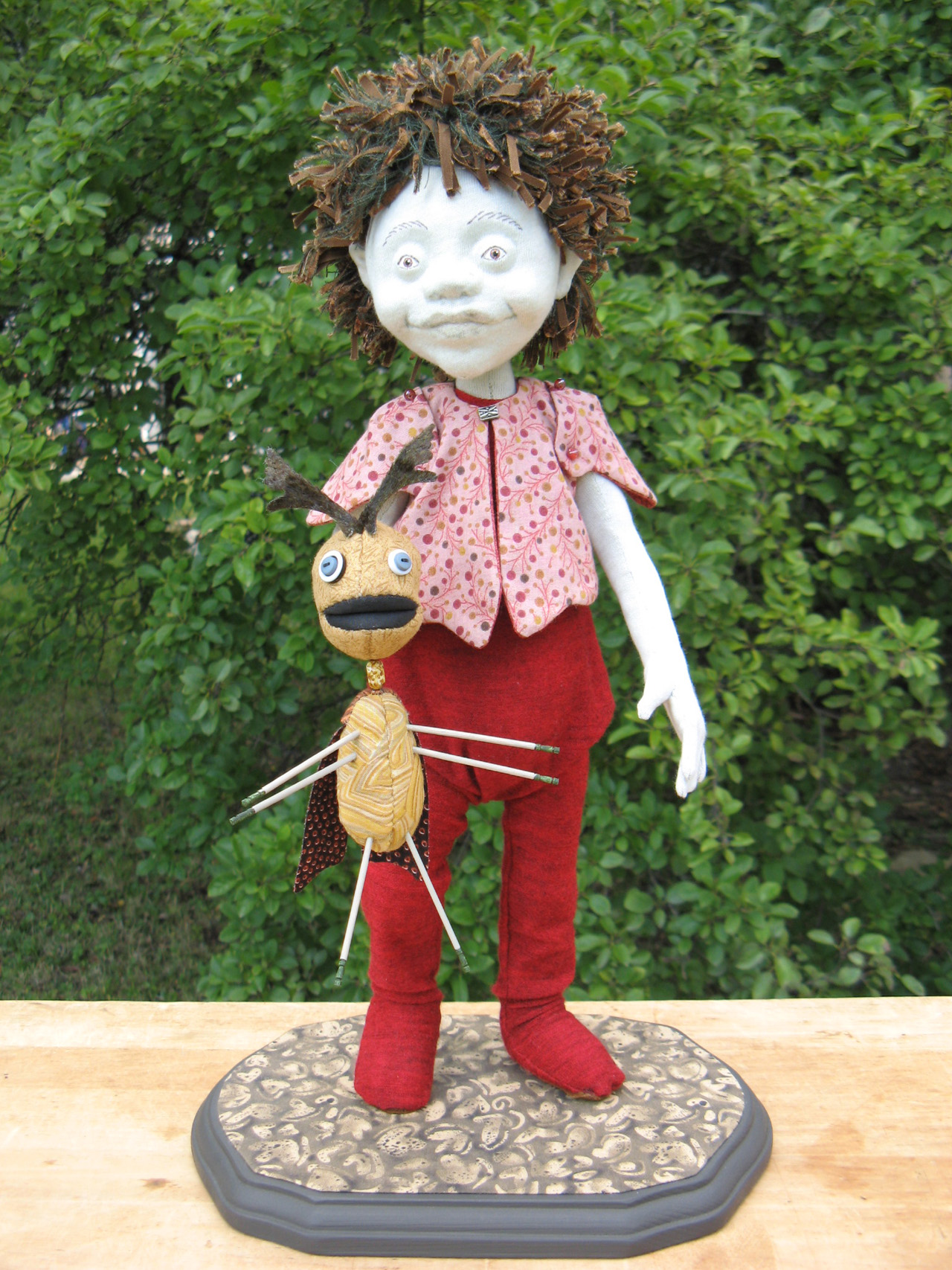
Brownie Puppeteer

Beauregard Hawthorne and his Amazing Puppet. 16 inches.

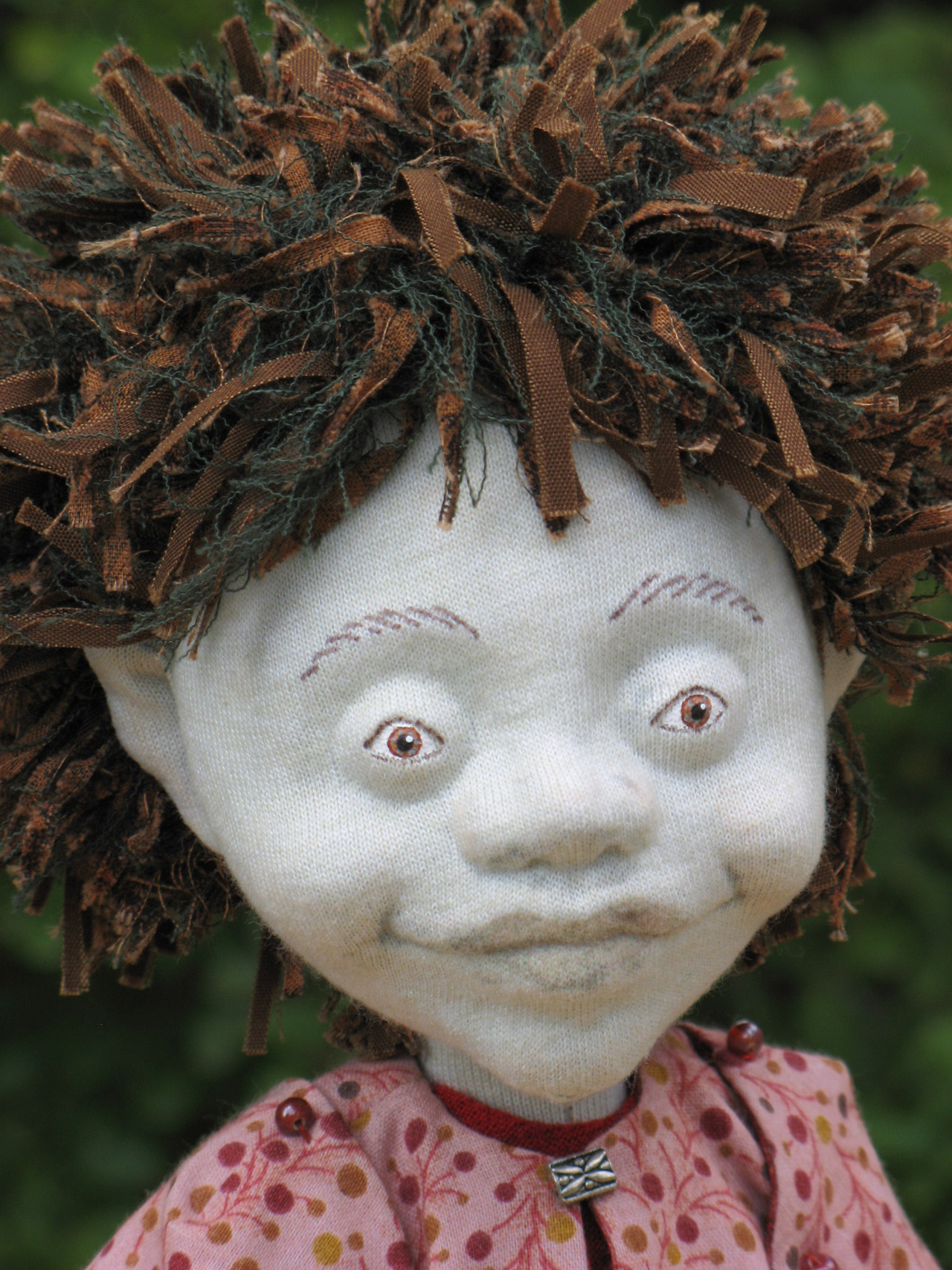
This piece was a lot of fun. My idea was to play with the juxtaposition of a happy, friendly, smiling brownie with a grumpy, abrasive, possibly hostile Beetle puppet.

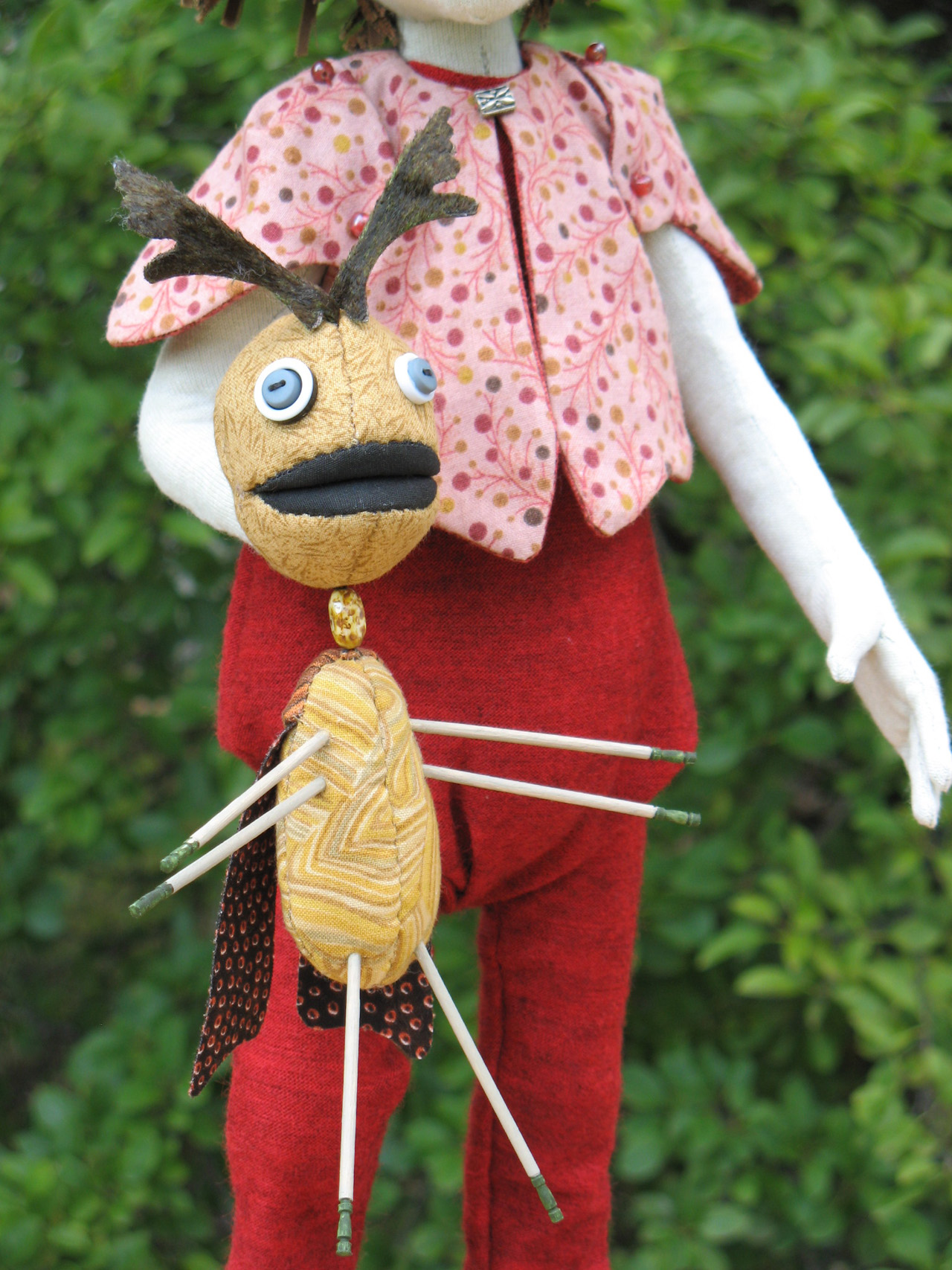
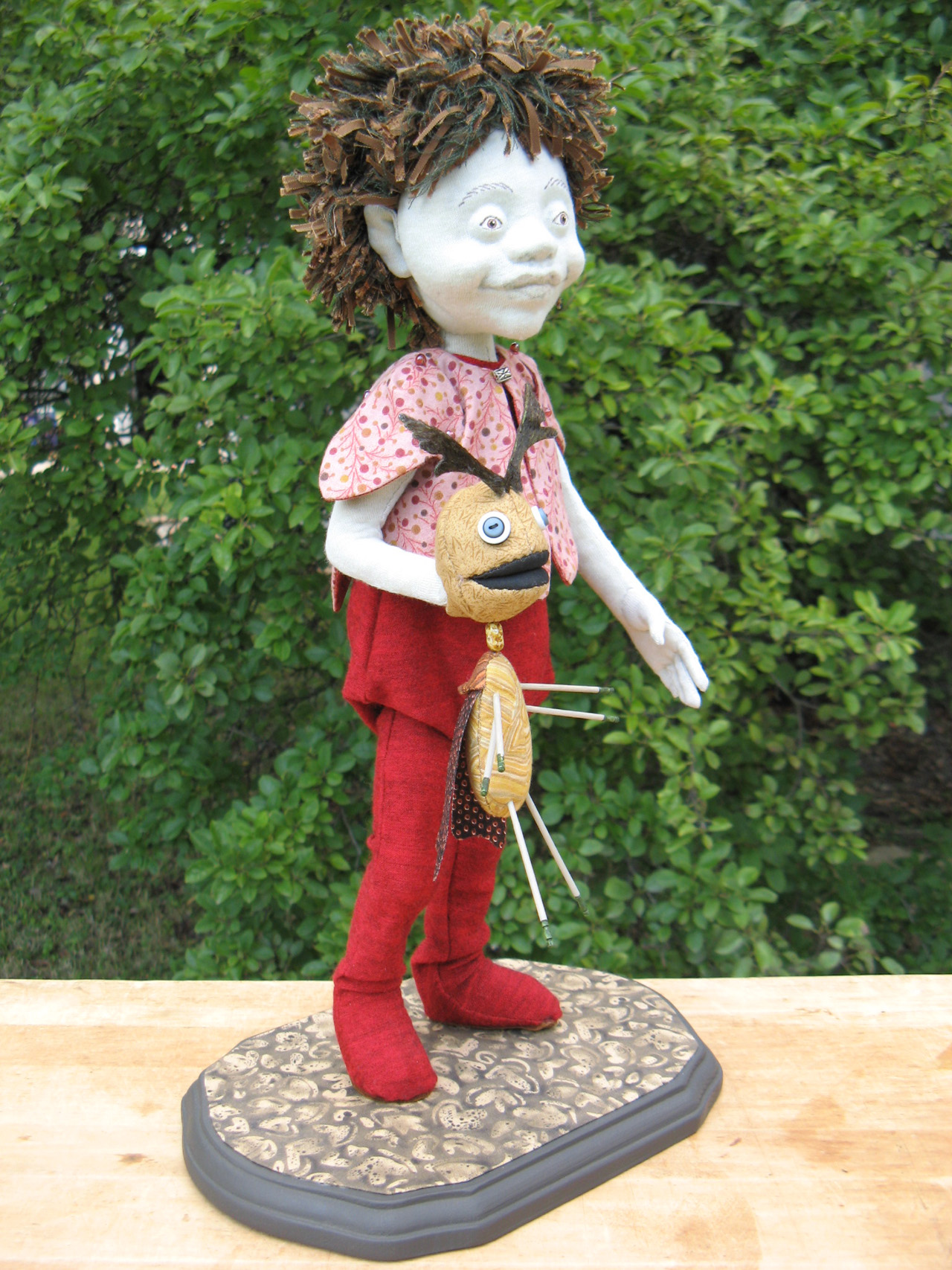
In this three-quarters view you can see that Beau is standing with his weight on his left leg and is starting to take a step with his right. You can also get a better view of the puppets wings and the way they come out from under a back yoke on his body.

Love, love, love the contrast between these two faces. The puppet head has an actual functional Muppet mouth and Beau’s hand is really inside. The beetles eyebrow/feelers are wired to hold their position and have a rich velvety texture.

Bonus Paper Doll

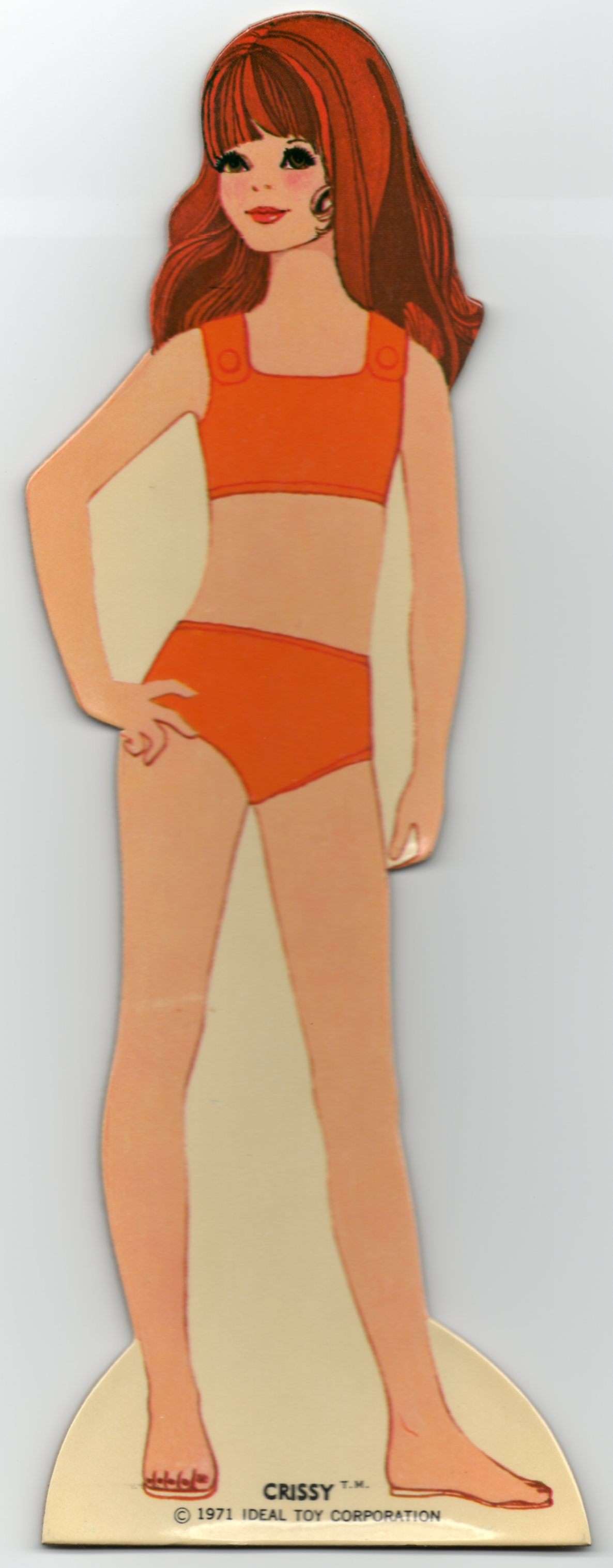
I feel a bit guilty about not posting last week, even though I was sick in bed with a bug; which is a pretty good excuse actually. But anyway here is a little bonus post for this week: a Crissy paper doll for you to print out and draw outfits for. Be sure to click on the picture to get a larger image.

I had both the actual doll and this paper doll as a child; both of which I have managed to reacquire thru the auspices of ebay.

Here’s a website where you can learn more than you ever wanted to know about the Crissy doll family. Check out the sewing/crocheting page where you can see (and download) the commercial clothing patterns that were available for her.

Have big fun!

Paper Model Dollhouse

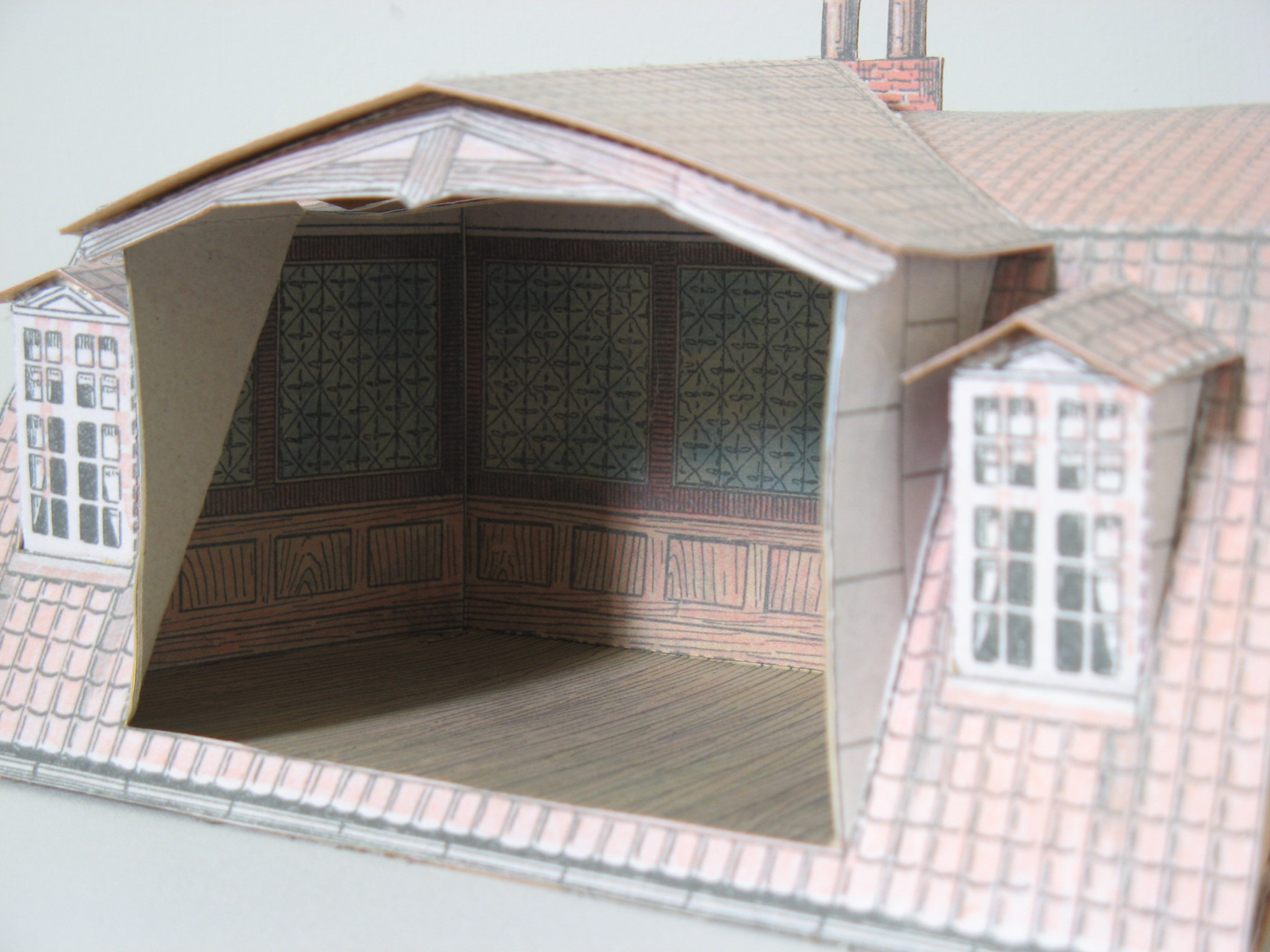
This is a trial run of a little paper dollhouse that is made of ink-jet printouts fused to cracker and cereal box cardboard. The files were sent to me by Esben (a very generous toy theatre fan) from Denmark. The dollhouse was originally published in Illustretet Family Journal in the first part of the 20th century. This was a Danish magazine that included a great many paper models including some fantastic toy theatres. Since this is just a trial I shrank all the parts down to fit on 8-1/2 x 11 paper and didn’t pay strict attention to scale. The house turned out to be around 1/24 scale (1/2″ to the foot). Even at this size I can easily fit my hand into the attic to arrange the furniture and a friends six year old had no trouble at all playing with the house.

The house is designed to come apart into two pieces — voila! the attic comes off. I particularly love the wallpaper  and wainscoting in the attic.

The parquet floor and french doors in the downstairs room are rather elegant, and the little portraits and sconces are lovely.

The attention to detail carries over into the furniture. Notice the woodgraining on the bedroom set (and the mattress ticking on that bed). Downstairs the table cloth does overhang the table legs all the way around (the legs are inset about 1/8″) and the designer included a piano!

The furniture is only partially cut out — those little white spaces in the chair  and table legs should normally have been trimmed but this was only a test. I printed the furniture sheets on plain white cardstock and didn’t fuse any reinforcement. They are surprisingly sturdy.

The actual assembly went smoothly, all the parts were well designed and fit together as they should. The only problem I had was that I should have just used plain card stock for the attic dormers. The cardboard was a bit too thick and made fitting them very fiddley. Also next time I would cut out the window panes; it’s too dark in that attic. It would be great fun to do this project again on a slightly larger scale and make little dolls to live in it.

Fabric Paper Dolls

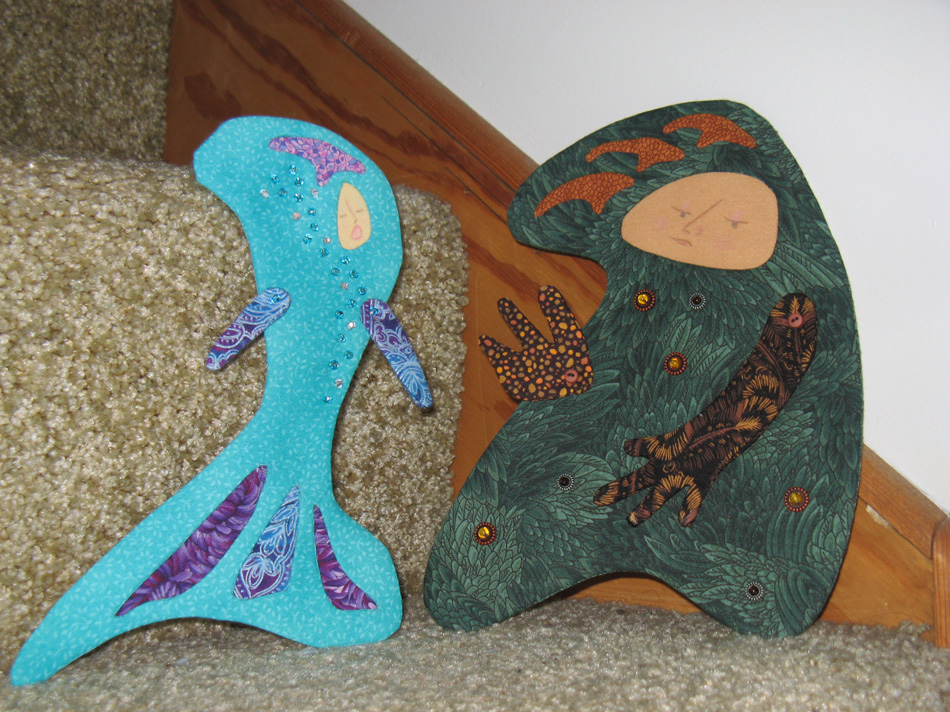
These are about a foot tall and have a metal ring sewn to their backs so that they can hang on the wall. Their arms are jointed with little beads in a button-joint arrangement. I made them using a felt fused to fabric technique. Each doll has three layers: a surface/design fabric layer; a central stiffening sandwich layer of muslin fused on both sides of felt; and a backing layer of wool felt. The arms are made from two pieces of fused felt and design fabric which I hand sewed back to back. All design fabric layers are lined so that there are no raw edges. The dolls are embellished with both reverse and regular applique and a variety of beads.

I been skiving off just lately. In actual fact this post is going out so late today because I decided to go and do just that at the park this afternoon. So I packed up a cold drink and a book and tootled down the road to my favorite “do nothing” spot and read the entire book; start to finish.

Ok, so it’s a childrens’ book but let’s not quibble — some of the finest stuff out there is/was written for children. Also let’s not forget that I tend to channel both Eloise and Little Fuzzy; some part of me will eternally be six years old. Which I believe is a Very Good Thing Indeed.

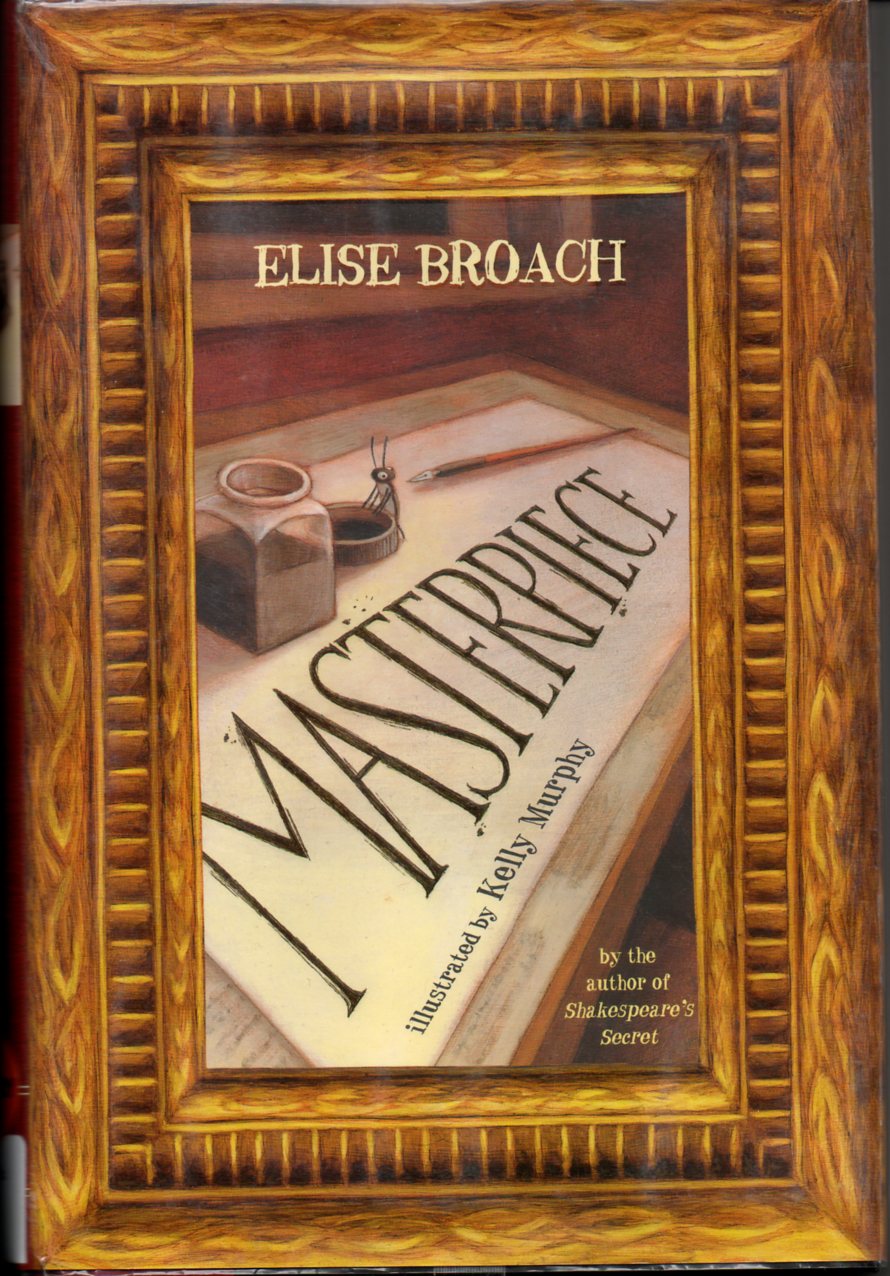
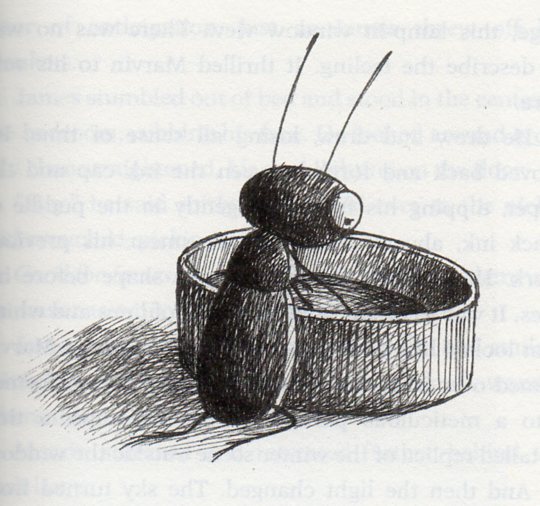
This is Marvin, he’s a beetle and this book is mostly about him. Well, and a boy named James. Marvin loves art and in the above picture he is dipping his frontmost legs into an ink bottle cap. Marvin finds that he loves to draw.

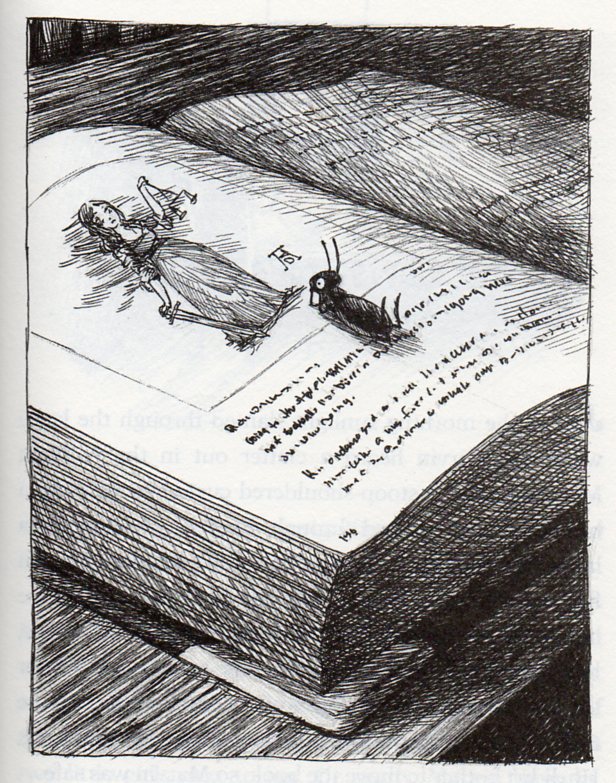
He also loves looking at drawings; specifically pen and ink drawings and etchings. The story is about Marvin and James and Albrecht Durer. Yes, that Albrecht Durer, the one who did all those Very Famous drawings and etchings.

Masterpiece is smart, funny, with plenty of action and I enjoyed it throughly. And I love this trend of action and mystery stories for children which revolve around great art/artists and/or architecture. Yes, it’s rather sneaky to expose the little beggars to art when they think they’re just reading a fun story but it’s all to the good in the long run.

Side note: the whole time I was reading this book I kept thinking about archie the cockroach who gamely leapt from typewriter key to typewriter key tapping out the poems of his human pal e.e. cummings. Which is why all those poems are in lowercase only; no little roach, however accomplished, could hold down the shift key while simultaneously jumping from letter to letter.

A couple of years ago Pat Lillich started encouraging me to try making a ball jointed doll. Pat is an utterly magnificent artist — google her! She sent me some great background and technical information. OK, so the website she directed me to was in Japanese but it really was the most in depth tutorial out there. So being particularly persnickety I used Babelfish to copy and paste and thusly translated the text from Japanese to English and slung the whole thing into a Word document so I wouldn’t have to do this process every time I wanted to refer to the tutorial. Which I am now very glad I did because I can’t find that particular site now, it’s seems to have gone away.

So here I was with all this terrific information and no really compelling reason to use it — until the challenge theme for last year’s NIADA was announced “Make a piece using a medium that is new to you”. Well I do use polymer clay to make the face masks of my work but I don’t do whole figures and this one would be jointed and I wanted to try this different clay mixture to see what it’s properties were like. I figured that was “New Medium” enough. So here is my BJD experiment:

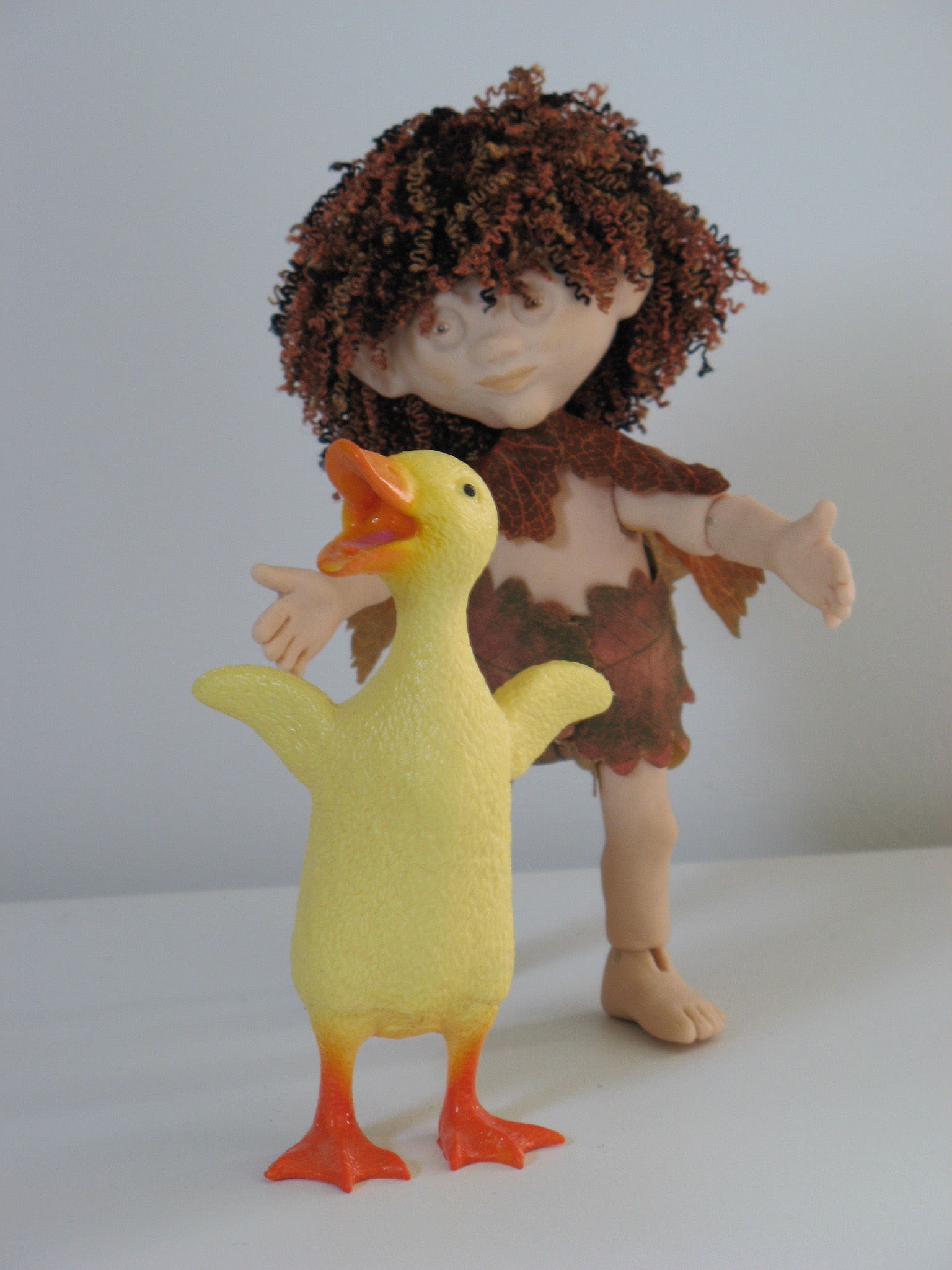
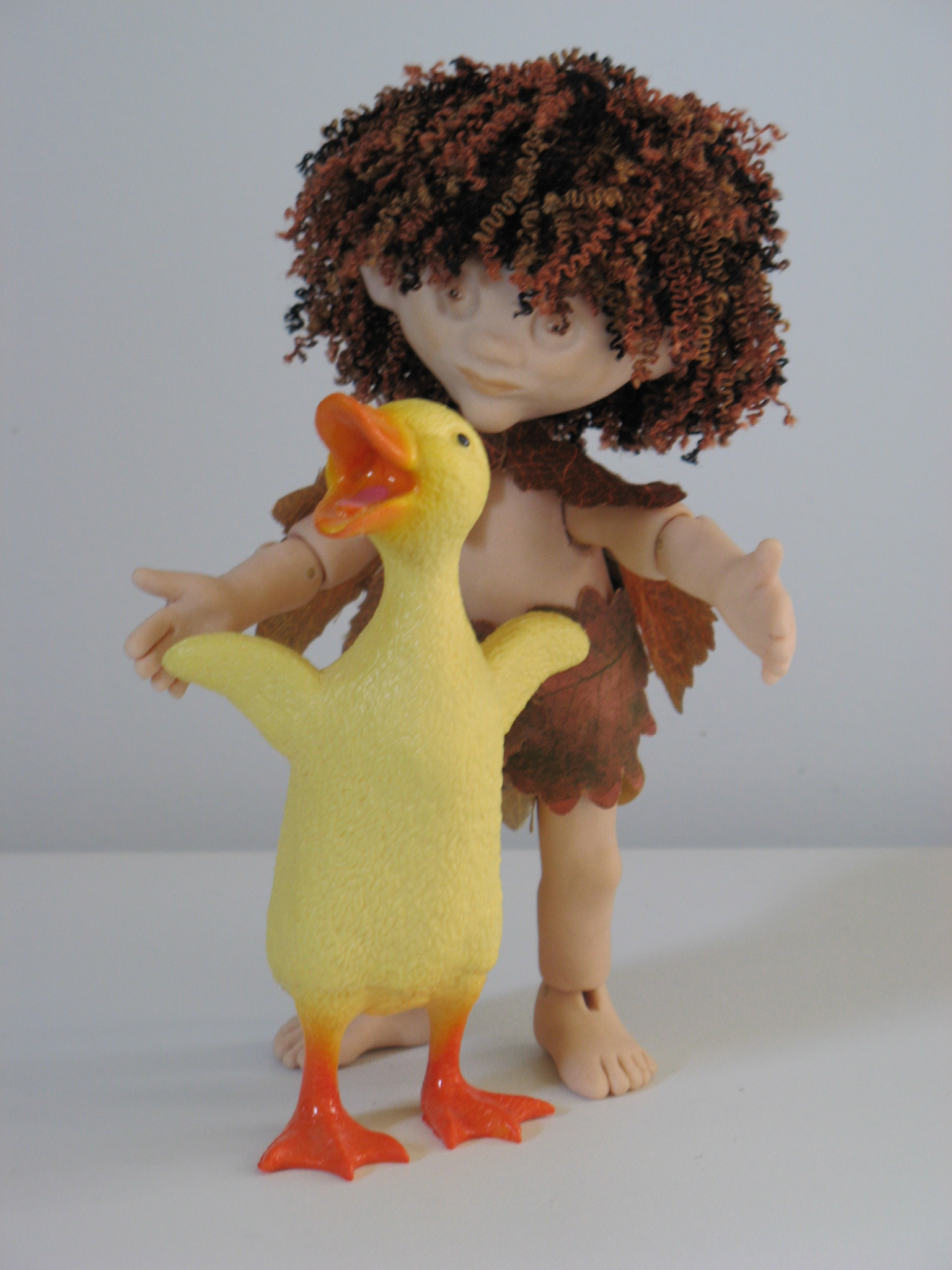
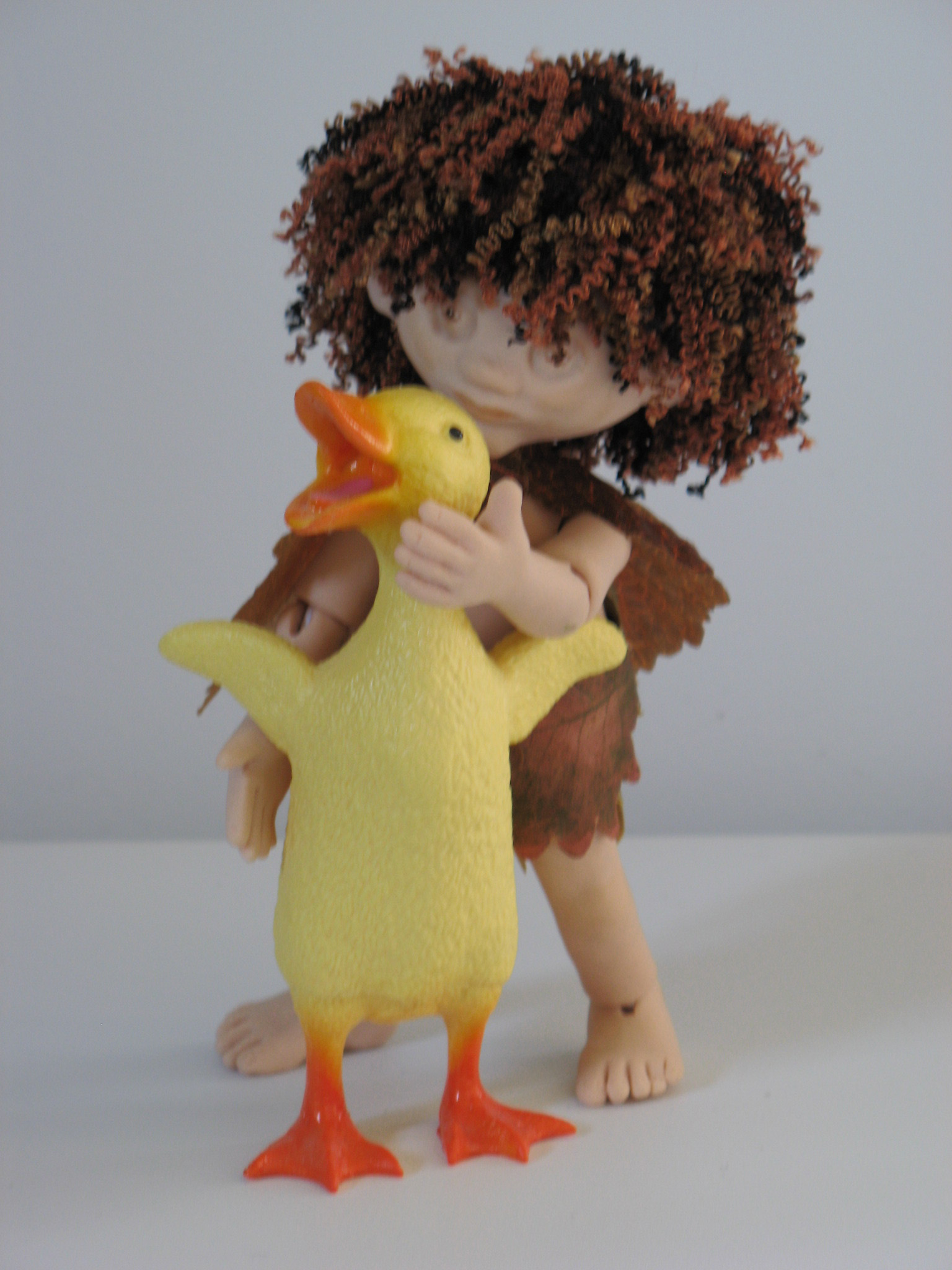
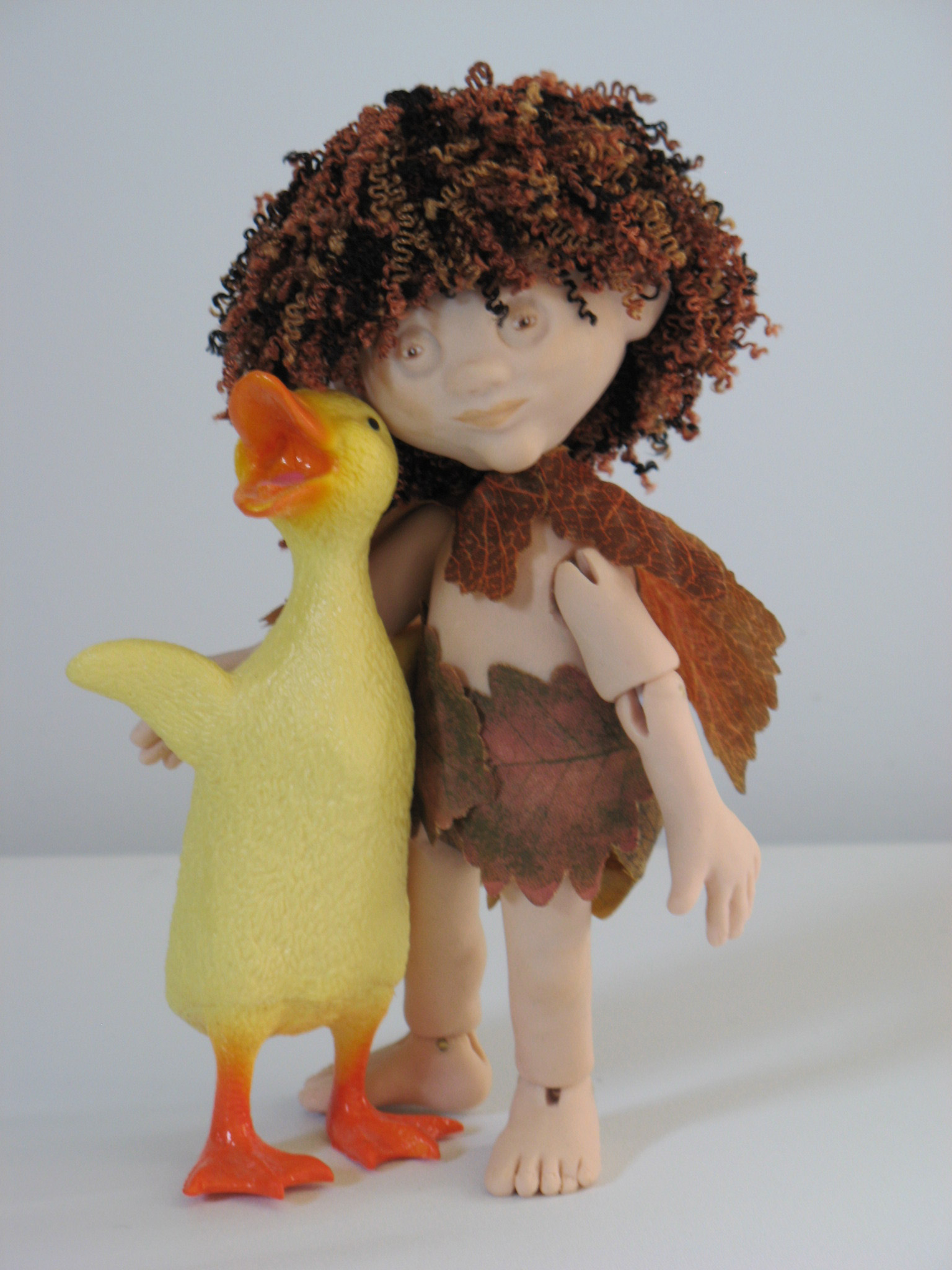
His name is Alexander and he’s about 6 inches tall. He and his pal Happy Duck have steadfastly refused to live in the display cupboard and spend their time chasing each other all over the living room. Which I have to say is far better than them playing tricks like “hide the car keys” or “build a fort out of DVDs (in the middle of the night) in the exact center of the living room”.

The technical low down: I made him out of a super sculpey-primo blend; his head and torso are completely hollow (which lowers his center of gravity enabling him to stand better); his upper arms and legs are made like shaped tube beads with a channel for the elastic down the center; I used brass rod at the joint terminuses (lower arms and feet) and strung him with round elastic from the fabric store. His wig is made from some upholstery trim (which I think has been discontinued). He balances on his feet just fine and has a nice range of movement. All in all, I’m satisfied with the experiment and may make several more.

Happy together!